Research-based comparison · 8 min read · Source check: November 4, 2026
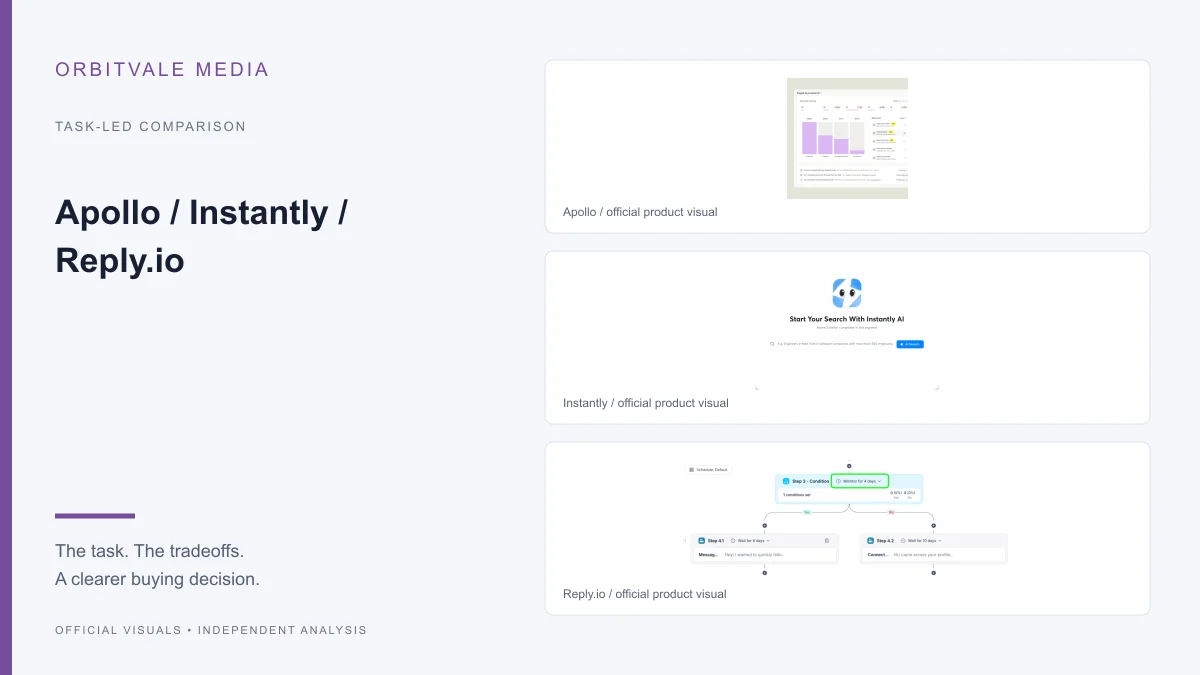
Apollo, Instantly and Reply.io overlap in sales technology but should be compared by the missing stage. Apollo is particularly relevant to prospect research and data connected to engagement. Instantly is a route for a maintained outbound email operation. Reply.io is worth investigating for structured engagement across selected channels.
Table of Contents
The common task
Research a narrow cohort of target wholesale accounts, remove existing relationships and run a controlled follow-up. Include a referral, negative response and request to stop, then assign a qualified conversation to the CRM.
This is a proposed comparison, not a report of controlled product tests. Use the same source material, required outcome and review standard for every candidate. When products solve different stages, compare the complete architecture instead of forcing an artificial winner.
The decision in one view
| Dimension | What to compare |
|---|---|
| Data | Measure correct target records and source freshness before sending. |
| Sending | Check actual account, mailbox and channel requirements. |
| Stop rules | Test scheduled actions after each reply type. |
| Packages | Separate data, outreach, AI and CRM-related costs. |
| Outcome | Use qualified conversations and responsible next actions rather than attempts. |
Where each candidate earns a place
Apollo
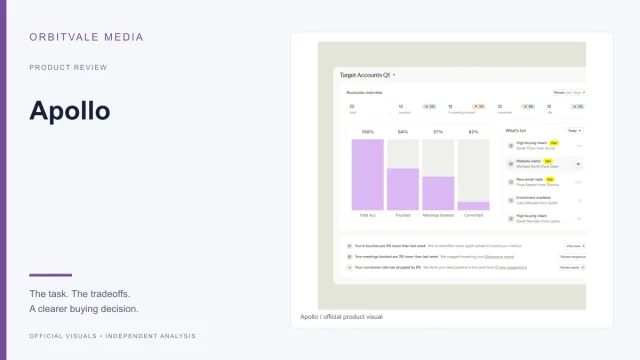
Apollo is relevant when a B2B team needs to research target companies and people, then connect that work to a deliberate sales process. Its data and engagement capabilities can reduce several manual steps. The buying decision should focus on the fit and accuracy of the records the team actually uses, not the total size of a database.
Strong-fit brief: A B2B or wholesale team with an explicit target-account definition and a maintained qualification process.
Weak-fit brief: A team buying the largest possible list without a useful offer, data checks or a responsible response and suppression process.
Full Apollo analysis · Official website.
Instantly
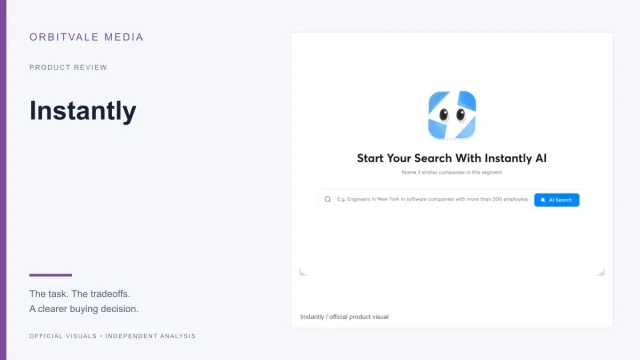
Instantly is worth investigating when a B2B team has a defined outbound email process and needs to manage it more coherently. Sending infrastructure and campaign tools can support the operation, but they do not create relevance or guarantee inbox placement. The customer response and suppression process deserve as much attention as the sending dashboard.
Strong-fit brief: A B2B team with a relevant offer, maintained account data and someone monitoring replies and sending health.
Weak-fit brief: A plan built around indiscriminate volume, guaranteed deliverability claims or unmonitored inboxes.
Full Instantly analysis · Official website.
Reply.io
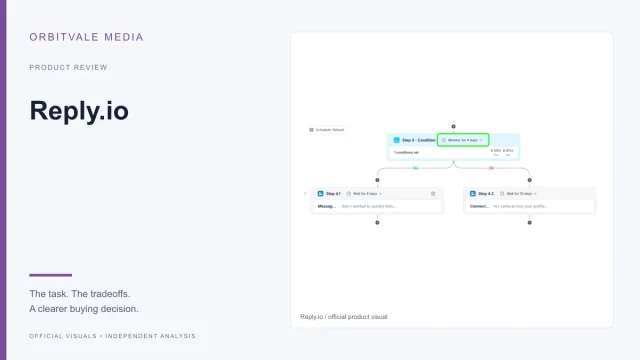
Reply.io is relevant when a sales team wants to coordinate outreach and follow-up across the channels it actually uses. The potential benefit is a clearer sequence of work and response handling. The danger is an automated routine that continues after the prospect has already changed the conversation.
Strong-fit brief: A B2B team managing structured follow-up with maintained prospect data and accountable reply handling.
Weak-fit brief: A business expecting a sequence to replace qualification or treating every communication channel as unrestricted automated capacity.
Full Reply.io analysis · Official website.
Run the evaluation through six checkpoints
1. Define the source and ownership
| Candidate | Product-specific task |
|---|---|
| Apollo | Write the target-account rule: Use region, business model, practical need and exclusion criteria. Explain why the offer is relevant. |
| Instantly | Select a narrow audience: Write the reason the offer fits and the criteria that exclude a company. |
| Reply.io | Define the permitted cohort: Use an explicit source and reason for contact. Remove duplicates and prior suppression records. |
2. Prepare the representative case
| Candidate | Product-specific task |
|---|---|
| Apollo | Select a small sample: Inspect company and role accuracy manually before expanding the list. |
| Instantly | Check account records: Deduplicate existing customers, active opportunities and prior suppression requests. |
| Reply.io | Write a modest sequence: Use messages that each add information. Avoid repeated nudges with no new value. |
3. Inspect the first accepted result
| Candidate | Product-specific task |
|---|---|
| Apollo | Deduplicate against the CRM: Exclude existing customers, active opportunities and prior suppression records. |
| Instantly | Prepare a truthful message: Use a specific useful premise without invented personalization or experience. |
| Reply.io | Set stop conditions: Document the treatment of interest, referral, absence, wrong person and requests to stop. |
4. Introduce an ordinary exception
| Candidate | Product-specific task |
|---|---|
| Apollo | Verify key details: Check the person’s relevance and the source of important fields. Keep uncertainty visible. |
| Instantly | Monitor a small cohort: Inspect delivery and actual replies before expanding. Investigate negative signals rather than overriding them. |
| Reply.io | Test channel transitions: Make a person reply before the next scheduled step and inspect whether queued actions remain. |
5. Ask another operator
| Candidate | Product-specific task |
|---|---|
| Apollo | Run a controlled contact path: Use a truthful, relevant message and a monitored reply process. Stop when the conversation changes. |
| Instantly | Classify and assign replies: Keep interest, wrong person, absence and requests to stop distinct. Assign the next action to a person. |
| Reply.io | Hand over a qualified reply: The representative should receive the account context, actual message and a specific next action. |
6. Price and document the result
| Candidate | Product-specific task |
|---|---|
| Apollo | Evaluate qualified outcomes: Measure correct records and useful conversations before attributing value to the wider dataset. |
| Instantly | Review the full bill: Include mailboxes, data, outreach tier and human response work using the actual workload. |
| Reply.io | Compare useful work: Review qualified conversations, negative signals and staff time alongside delivery and sending metrics. |
Operating questions behind the comparison
Write the reason this account belongs in the cohort
Use a concrete business need and clear exclusions. A company matching an industry label is not automatically a good prospect. Verify the role and relevant context before contact.
Deduplicate against customers, active opportunities and suppression records. Preserve verified salesperson knowledge when imported enrichment disagrees.
Make every sequence step earn its place
Each contact should add useful information or a relevant question. Repeating a request with more urgency does not improve the offer. Keep personalization truthful and supported by a source.
Use a modest cohort to discover message and data problems. Do not treat negative responses as noise to be overcome by more volume.
Make stop conditions observable
An interested reply, wrong person, absence and request to stop require different actions. Define who classifies the response and whether scheduled steps remain queued.
Test the transition in the actual account. A stop rule written in a process document is incomplete until the next scheduled action behaves accordingly. Keep human review for ambiguous responses.
Price the whole conversation process
Data, mailboxes, platform access, channel usage and human response work all belong in the estimate. Separate valid target records from attempted contacts and qualified conversations.
No platform can guarantee inbox placement or commercial results. Evaluate the evidence from the real segment and preserve the limits of a small trial. Useful learning can justify stopping a weak campaign before scaling it.
Compare the same complete cost
Apollo cost drivers
If 500 researched records yield 200 correctly matched target contacts, divide data and review cost by those 200 useful records. Then evaluate the conversations separately. Add the selected credits, seats, mailbox infrastructure and CRM work; do not assume a data platform replaces the whole sales operation.
Instantly cost drivers
A hypothetical 400-contact pilot producing eight qualified conversations has a different economics from 400 sends. Divide data, mailbox, platform and review cost by those useful conversations after excluding false positives. Report the actual evidence later and keep assumed outcomes clearly labelled.
Check current Instantly pricing.
Reply.io cost drivers
For a four-person team, model required packages, communication services and data usage. If each useful reply needs an average of ten minutes to qualify and assign, 60 replies require ten hours of human work. Include that capacity so a successful campaign does not create an unattended queue.
Check current Reply.io pricing.
| Shared cost line | Comparable assumption |
|---|---|
| Required subscription | Use the tier that contains the actual workflow and record currency, billing interval and team size. |
| Variable services | Count the real billing unit and separately priced carrier, payment, communication or model services. |
| Setup and change | Include source cleanup, integration, training and the first meaningful revision. |
| Review and exceptions | Budget the people who approve outputs, investigate discrepancies and complete customer follow-up. |
| What disappears | Only count a saving when the old subscription or manual task can actually be retired. |
Reasons to reject a candidate
Apollo limits for this task
- Database-size distraction: A large inventory of records is irrelevant when the target segment is inaccurate.
- Enrichment conflict: Imported data can overwrite verified context without a field-ownership rule.
- Attempt metrics: More contacts and sends can conceal weak fit. Use qualified progress and negative responses too.
Instantly limits for this task
- Volume bias: More attempts can conceal a weak market or offer.
- Guarantee language: No sending tool can guarantee recipient inbox placement or a commercial outcome.
- Fragmented subscriptions: Data, sending and relationship management may be separate costs and workflows.
Reply.io limits for this task
- Unstopped automation: Continuing after a reply can damage the conversation.
- Package confusion: Data, AI and multichannel entitlements may follow different limits.
- Invented personalization: Generated claims about a prospect need verification before they appear in a message.
These are evaluation questions, not assertions that a product always fails. When a limitation creates another handoff, assign an owner and price that work. If neither candidate meets the essential requirement, revise the shortlist rather than quietly weakening the requirement after seeing a polished demo.
The comparison mistake to avoid
No database size or sending feature guarantees relevance, delivery or sales. A smaller verified cohort can produce more useful learning than a large unqualified export.
Our conditional recommendation
Choose the route that closes the evidenced gap in the process. A team with poor target data should not solve the problem by increasing sending capacity. A team with good data but unattended replies needs ownership before another sequence tool. Keep integrations simple and verify package boundaries.
What to retain after deciding
Keep the original brief, selected account configuration, accepted output and changed-case result. Record which assumption would reverse the recommendation: volume, team ownership, output format or the cost of an exception. This makes the comparison useful again when the business changes. A decision to postpone a purchase is also a valid result when the process or source data is not ready.
Sources, image credits and scope
OrbitVale’s analysis combines official product information with proposed operating exercises. We have not represented these exercises as hands-on tests, measured vendor results or customer case studies. Calculations use stated assumptions. Product and plan sources were reviewed on November 4, 2026.
Apollo: Official overview · Current pricing.
Instantly: Official overview · Current pricing · Supporting official source 1 · Supporting official source 2 · Supporting official source 3.
Reply.io: Official overview · Current pricing · Supporting official source 1 · Supporting official source 2.
Official visuals are credited beside each figure; they are vendor-published material, not independent test screenshots. Interactive plan displays and account-specific terms can differ. Confirm checkout, region and required entitlements before purchasing. See our editorial method and commercial disclosure.