Research-based product review · 7 min read · Source check: November 4, 2026
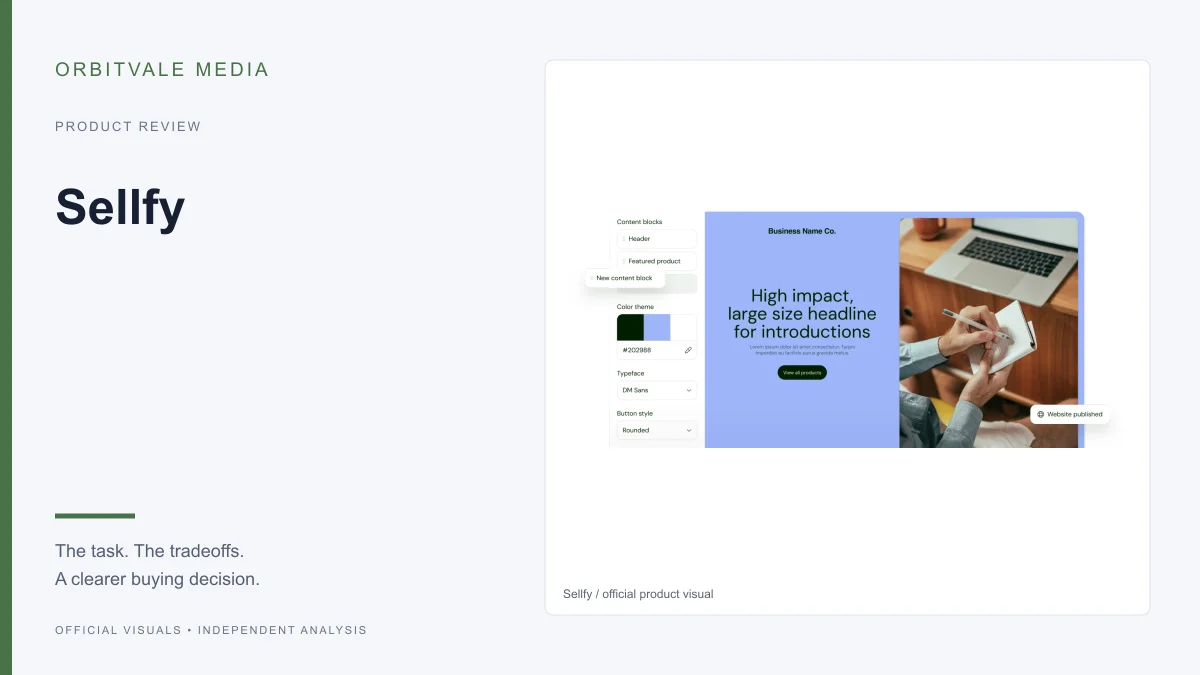
Sellfy is relevant to creators and small brands selling digital products, subscriptions or selected physical goods without building a large custom storefront. A simpler selling environment can reduce setup work. The commercial decision still includes payment processing, product access, refunds, taxes and the plan’s sales thresholds.
We would begin with the customer’s entire purchase: a clear product page, successful payment, usable delivery and a straightforward support route. A digital file being technically downloadable does not establish that a buyer knows which version to use or can recover access later.
Table of Contents
The buying decision
| Put it on the shortlist when | Choose another route when |
|---|---|
| A creator or brand selling a focused catalogue and valuing a straightforward store and delivery workflow. | A complex marketplace or highly customized commerce operation without verifying feature scope and integration needs. |

A realistic job for Sellfy
A designer sells a planning template and a paid update subscription. The proposed trial includes a first purchase, a failed payment, a product update and a buyer who loses the original delivery email.
What the capabilities mean in practice
Storefront and products
Sellfy offers a hosted selling environment for creator products. Official product overview.
Write exactly what the buyer receives and the required software or format. A vague digital-product page creates preventable support.
Digital delivery
The platform supports selling downloadable material. Official product overview.
Test access from another device and the version a returning buyer receives after an update.
Subscriptions
The product includes subscription-oriented selling options. Official product overview.
Confirm payment, renewal and cancellation behaviour for the intended offer and gateway.
Sales thresholds
Pricing includes plan-dependent sales bands and features. Official product overview.
Model growth and processing separately. A revenue threshold can change the required tier before the team adds more products.
Current plan boundaries
Subscription plans have annual sales-volume ceilings and different marketing/file-size allowances. Starter lists up to $10,000 annual sales, Business $50,000 and Premium $200,000. Sellfy lists 0% platform transaction fees; payment-processor charges remain separate. Official plan source.
- Growth features such as upselling and cart abandonment are in Business/Premium rather than Starter.
- File-size limits and sales thresholds matter for large downloadable assets and fast growth. Fulfilment, payment processing and tax obligations are separate from the platform subscription.
The snapshot above is tied to the review date. Promotions, billing interval, location and account migration can change the payable amount. The decision below uses the cost drivers rather than pretending a headline fee describes every configuration.
A practical evaluation sequence
Use the following as a proposed pilot. Keep source inputs and accepted outputs so another person can review the result. The sequence is designed around the task above; it is not a claim that OrbitVale ran an account test.
1. Define the deliverable
Specify file format, included versions, access period and support boundary.
2. Create one real product
Use a representative file size and a clear instruction sheet. Test the customer’s required software.
3. Complete a safe purchase test
Inspect payment confirmation, delivery and the customer record using the supported test process.
4. Rehearse recovery
Use the buyer’s normal access problem: a lost email, changed device or incorrect download.
5. Update the product
Identify who receives the new file and how older versions are distinguished.
6. Check the commercial ledger
Compare gross sales, processing, refunds and plan eligibility before estimating profit.
The operating details that decide the fit
Define what the buyer receives
A digital product needs a format, version, access expectation and clear support boundary. State required software and whether updates are included. A vague promise creates avoidable refunds and customer questions.
Test the delivered file on the device or application the customer is expected to use. A successful download is not the same as a usable product.
Follow payment through access
Use a supported test route to inspect payment confirmation, product delivery and the customer record. Include a lost email and a returning buyer on another device.
For recurring products, verify renewal, failed payment, cancellation and the resulting access state. Keep these behaviours aligned with the offer language rather than assuming the payment gateway decides the customer promise.
Maintain product versions
Identify the authoritative file and the buyers eligible for updates. Keep release notes for material changes. A returning customer should understand whether they are opening a current or older version.
Store the editable source separately from the delivery file. If the platform changes, the business should still be able to maintain the product and explain past purchases.
Budget support and processing
Digital delivery removes some physical handling but not all operating work. Payment charges, refunds, taxes, access questions and product updates remain part of contribution.
Estimate a reasonable support case mix and replace assumptions with observed data after launch. Compare sales thresholds and the next plan band before treating the entry subscription as a permanent cost.
Tradeoffs and reasons to reject the fit
Ambiguous licence
Buyers need to understand permitted use and whether updates are included.
Access confusion
Successful payment is not the end of fulfilment if the buyer cannot use the file.
Threshold surprise
Revenue growth can require a different plan. Include the next band in the budget.
Pricing the complete job
Sales bands and support
At an illustrative $25 price and 80 sales, gross revenue is $2,000 before processing, refunds, taxes and support. If 10% require 12 minutes of help, support adds 96 minutes. Model that work and the applicable plan threshold rather than treating digital goods as costless after creation.
| Cost line | Include in the estimate |
|---|---|
| Required subscription | Use the tier that contains the actual workflow and record currency, billing interval and team size. |
| Variable services | Count the real billing unit and separately priced carrier, payment, communication or model services. |
| Setup and change | Include source cleanup, integration, training and the first meaningful revision. |
| Review and exceptions | Budget the people who approve outputs, investigate discrepancies and complete customer follow-up. |
| What disappears | Only count a saving when the old subscription or manual task can actually be retired. |
Keep a normal-month estimate and a busy-month estimate. Use the same accepted outcome in both. If the tool produces an intermediate draft, alert, record or label, include the remaining work needed to complete the customer or publishing task. Replace the example assumptions with your own observed figures after the pilot.
Alternatives and the boundary between jobs
Kit
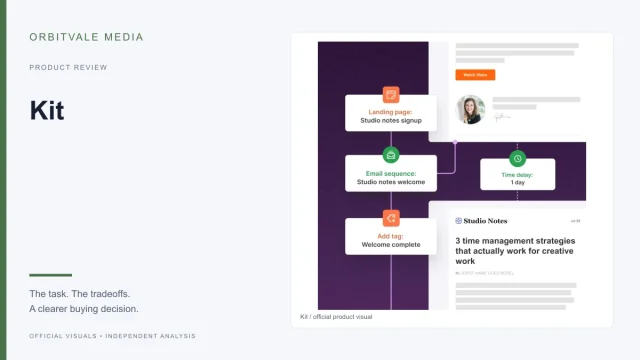
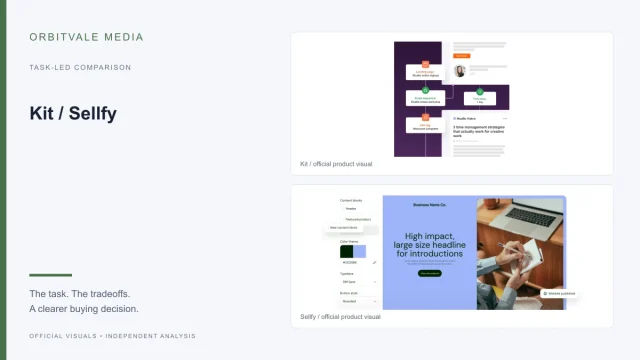
Read the Kit review. A creator building a permission-based audience around knowledge, content or digital products.
Kit is a useful shortlist for creators whose email relationship sits close to their product business. A subscriber may move from an educational sequence to a digital product, paid content or recurring offer. The workflow benefits from clear audience interests and a sensible distinction between a reader and a paying customer.
Printify
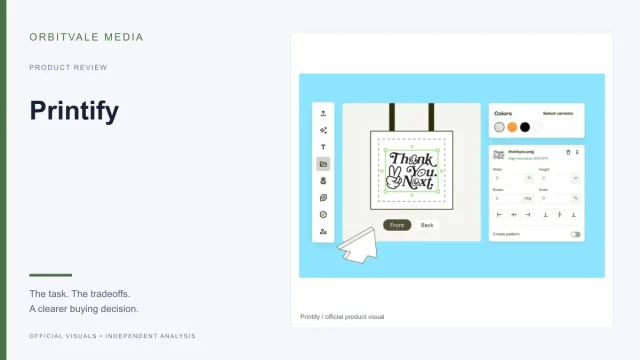
Read the Printify review. A creator or brand testing a focused print-on-demand range with a margin model and willingness to review samples.
Printify is relevant when a brand wants to sell printed products without holding the full finished-goods catalogue. Its provider network makes product and fulfilment choices part of the operating model. The business still owns the customer promise, even when another company produces and dispatches the item.
GetResponse
Read the GetResponse review. A small ecommerce or knowledge business combining acquisition pages with permission-based email and a manageable automation programme.
GetResponse is a sensible shortlist when email marketing and lead capture currently live in disconnected tools. Forms, landing pages and automations can support one customer journey from initial interest to a useful follow-up. The important question is whether the chosen plan covers the actual journey, including ecommerce events and the maintenance of customer permission.
A decision record to keep
For Sellfy, record the selected account and plan, the specific job, the accepted output and the unresolved limitation. The acceptance decision should explain whether “ambiguous licence” is manageable for this business. Name the owner of the next review and preserve the result of the changed-case exercise, not only the easiest first pass.
Our recommendation
Sellfy is worth a deliberate trial when this describes your business: A creator or brand selling a focused catalogue and valuing a straightforward store and delivery workflow. The case is weaker when this remains true: A complex marketplace or highly customized commerce operation without verifying feature scope and integration needs. Start with the bounded scenario, price the complete job and expand after the team can explain the exceptions. Open the official Sellfy website.
Sources, image credits and scope
OrbitVale’s analysis combines official product information with proposed operating exercises. We have not represented these exercises as hands-on tests, measured vendor results or customer case studies. Calculations use stated assumptions. Product and plan sources were reviewed on November 4, 2026.
Sellfy: Official overview · Current pricing.
Official visuals are credited beside each figure; they are vendor-published material, not independent test screenshots. Interactive plan displays and account-specific terms can differ. Confirm checkout, region and required entitlements before purchasing. See our editorial method and commercial disclosure.