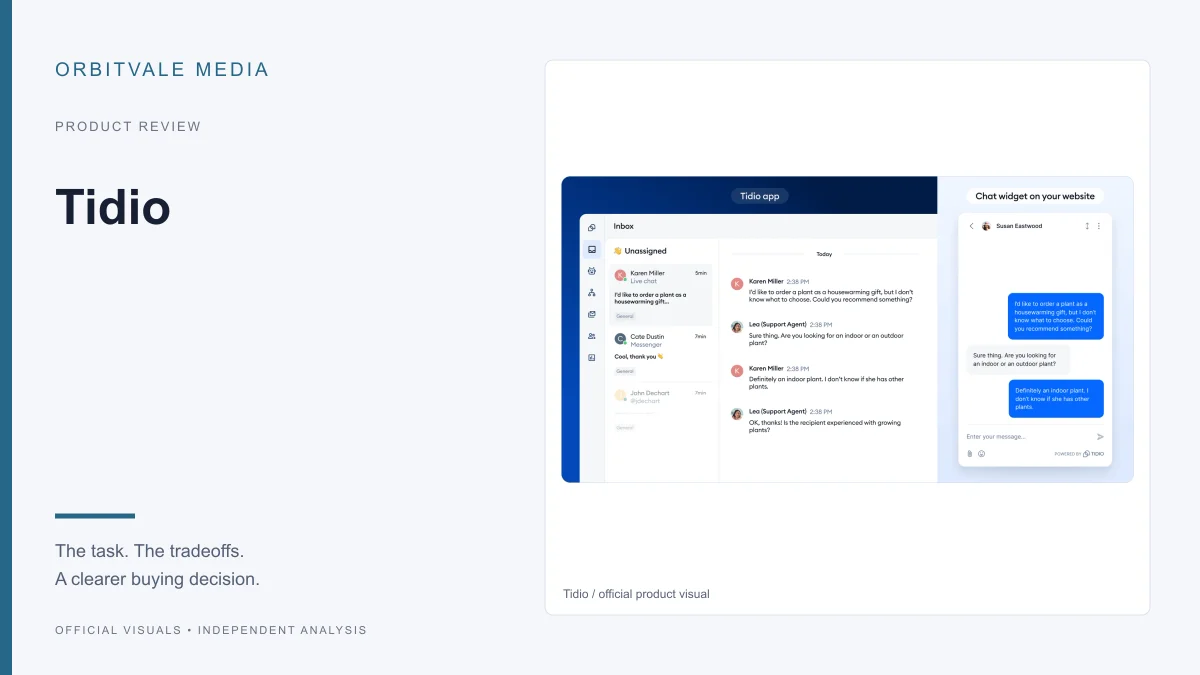
Research-based product review · 7 min read · Source check: November 4, 2026
Tidio is relevant when a store needs a clearer way to handle website questions and selected automated answers. The most useful assistant can answer a supported question, recognize uncertainty and preserve context for a human. It should not turn an incomplete policy into a confident promise about returns, stock or delivery.
We would start with the questions already consuming service time, using approved product and policy sources. Keep informational answers separate from actions that change an order. The actual value depends on correct resolution and reduced service work, not simply a count of automated conversations.
Table of Contents
The buying decision
| Put it on the shortlist when | Choose another route when |
|---|---|
| An ecommerce team with maintained help material and a staffed route for exceptions and customer-specific issues. | A store with contradictory policies, no service owner or an expectation that a bot can authorize every commercial exception. |
A realistic job for Tidio
A pet products store gets repeated questions about sizing, order status and returns. The proposed pilot includes a straightforward size question, a missing measurement and a customer asking for a refund outside the standard policy. Only the supported factual answer should be automated.
What the capabilities mean in practice
Website chat
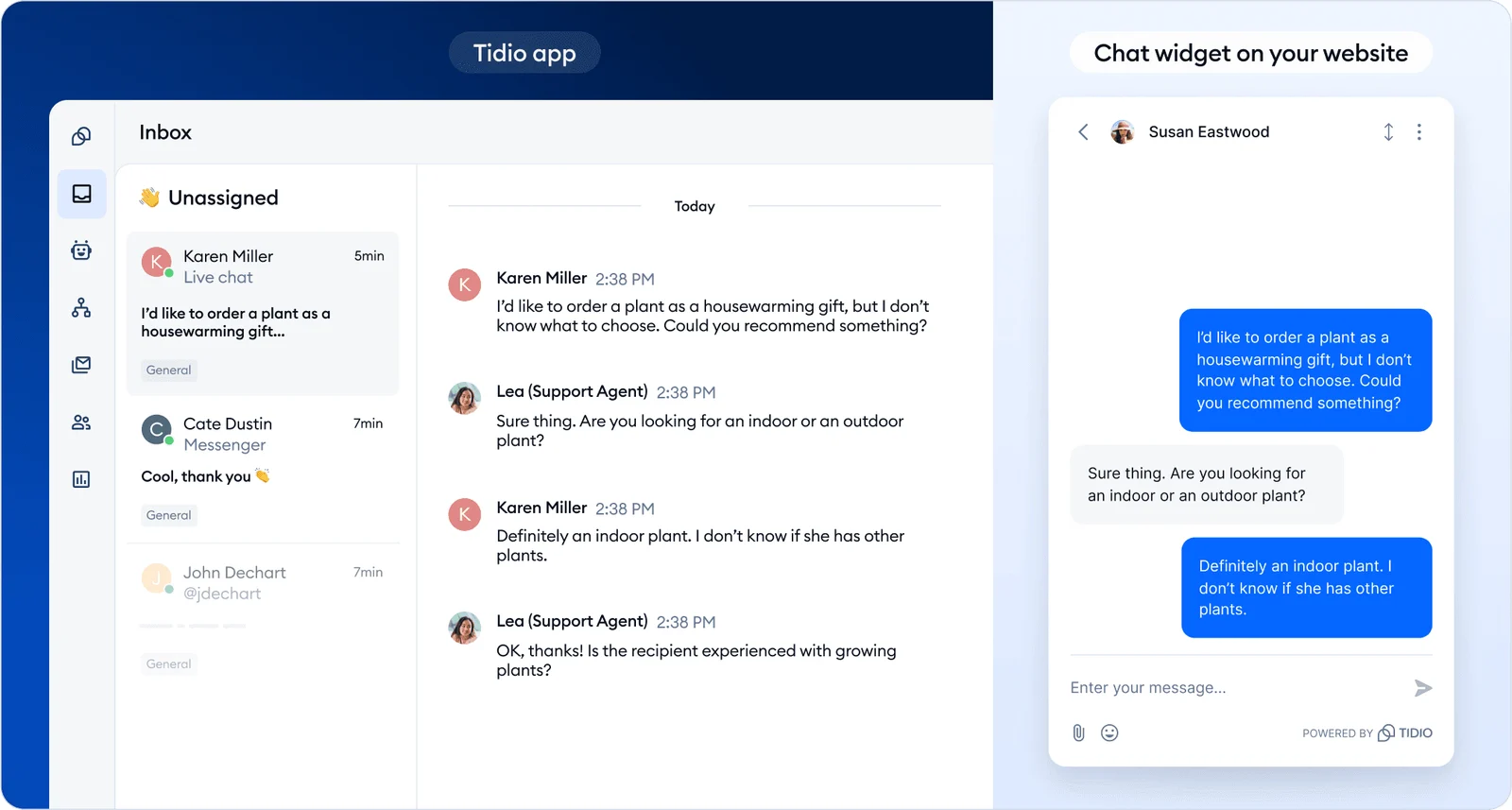
Tidio offers customer chat and service workflows. Official product overview.
Test mobile presence, availability and whether a customer understands when a person will reply.
Lyro AI
The vendor offers an AI customer-service product. Official product overview.
Use approved sources and test unsupported questions. A confident answer is useful only when the source supports it.
Automation and handoff
The offering includes flows and team handling. Official product overview.
Define the reason for escalation and preserve the question and relevant context for the agent.
Usage and plans
Plans distinguish service, automation and AI allowances. Official product overview.
Price the actual mix of human conversations and AI handling. A headline conversation count may not describe every component.
Current plan boundaries
The current configurator separates human-support billable conversations, Lyro AI conversations and visitors reached by Flows. These are distinct usage dimensions rather than one interchangeable conversation allowance. Base plan, add-on quotas, term and managed options affect total cost. Official plan source.
- Starter includes 100 billable human-support conversations in the viewed plan; Growth starts at 250. The observed Starter/Growth prices are annual equivalents, not necessarily month-to-month invoices.
- New accounts receive 50 Lyro conversations as a one-time allowance. A paid Lyro AI quota is required for recurring monthly refresh; do not promise a free 50 every month.
- Flows reaches visitors using designed rules; Lyro answers from AI knowledge and actions. Paid Lyro quotas gate product recommendations and broader action use; a live-chat subscription alone does not imply unlimited AI resolutions.
The snapshot above is tied to the review date. Promotions, billing interval, location and account migration can change the payable amount. The decision below uses the cost drivers rather than pretending a headline fee describes every configuration.
A practical evaluation sequence
Use the following as a proposed pilot. Keep source inputs and accepted outputs so another person can review the result. The sequence is designed around the task above; it is not a claim that OrbitVale ran an account test.
1. Choose ten common intents
Use real service categories and identify which require account-specific information or authority.
2. Clean source answers
Resolve contradictory return and delivery statements before adding them to the knowledge source.
3. Test incomplete questions
Remove a key measurement or order detail. The assistant should ask or hand over rather than guess.
4. Ask an unsupported exception
Use a refund request outside the policy and inspect whether commercial authority remains with staff.
5. Follow the handoff
Have an agent continue the conversation without asking the customer to repeat everything.
6. Audit accepted resolutions
Review a sample of apparently resolved conversations and measure remaining human work.
The operating details that decide the fit
Resolve the source before automating it
Check whether product pages, delivery policies and help articles agree. A bot cannot create a dependable answer from contradictory material. Assign an owner and review date to the source most likely to change.
Use the customer’s actual wording in the trial. Internal category labels may not resemble how a shopper asks a size, compatibility or order question.
Keep answer retrieval separate from authority
Explaining a published policy is different from approving a refund or changing an address. Define which actions need identity verification and staff authority.
Ask a question outside the source and a question missing a critical detail. The assistant should expose uncertainty or request information rather than complete the answer imaginatively.
Inspect the handoff from the agent’s side
The receiving person should see the question, relevant source and information already supplied. A customer should not have to repeat the whole conversation simply because the automated flow ended.
Test closing time and unavailable staff. Set a realistic response expectation and identify who owns the next day’s unresolved queue.
Audit apparent resolutions
A conversation marked resolved may still leave the customer confused or require a later email. Review a sample and connect repeat contacts where possible.
Use correctly completed informational cases as the initial automation denominator. Keep account-specific exceptions and actions requiring authority in their appropriate route. This produces a more honest cost estimate than treating every incoming question as automatable.
Tradeoffs and reasons to reject the fit
Source contradictions
A help centre and product page can disagree. Fix the underlying information.
False resolution
A closed conversation may still leave the customer confused. Review outcomes, not just status.
Action authority
Finding an answer is different from changing an order or authorizing a refund.
Pricing the complete job
Conversations and verified resolution
If 500 monthly questions include 200 genuinely repetitive informational cases, that is the initial automation opportunity rather than all 500. Suppose a review later finds 140 correctly resolved without follow-up; use that evidence and audit time in the value estimate. The figures here illustrate a method, not a measured Tidio result.
| Cost line | Include in the estimate |
|---|---|
| Required subscription | Use the tier that contains the actual workflow and record currency, billing interval and team size. |
| Variable services | Count the real billing unit and separately priced carrier, payment, communication or model services. |
| Setup and change | Include source cleanup, integration, training and the first meaningful revision. |
| Review and exceptions | Budget the people who approve outputs, investigate discrepancies and complete customer follow-up. |
| What disappears | Only count a saving when the old subscription or manual task can actually be retired. |
Keep a normal-month estimate and a busy-month estimate. Use the same accepted outcome in both. If the tool produces an intermediate draft, alert, record or label, include the remaining work needed to complete the customer or publishing task. Replace the example assumptions with your own observed figures after the pilot.
Alternatives and the boundary between jobs
Manychat
Read the Manychat review. A brand or creator with recurring Instagram or other supported social conversations and an owned response process.
Manychat is worth considering when a business receives repeated social interactions that can be answered or routed through a clear conversation. A comment-to-message journey or a product question can become easier to manage when the customer’s request is recognized and a useful next step follows. The strongest flow is usually short and easy to leave.
Quo
Read the Quo review. A small sales or service team wanting shared business conversations and a practical route from missed contact to owned follow-up.
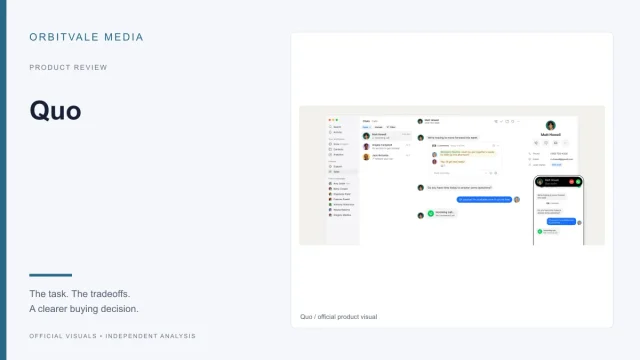
Quo, formerly OpenPhone, is worth considering when business calls and texts have become too important to live inside one person’s mobile number. Shared conversation context can make a small team more dependable, especially when another colleague must continue a request. The central buying question is whether the phone workflow produces a clear owner and an honest customer promise.
Brevo
Read the Brevo review. A small business evaluating email and customer messaging with a clear contact count, send pattern and consent record.
Brevo is worth considering when a business needs permission-based messaging and wants to compare cost through its actual sending pattern. The platform covers more than email, but purchasing decisions should begin with the specific channel and customer journey required. A large send allowance does not automatically include the necessary automation, contacts or transactional setup.
A decision record to keep
For Tidio, record the selected account and plan, the specific job, the accepted output and the unresolved limitation. The acceptance decision should explain whether “source contradictions” is manageable for this business. Name the owner of the next review and preserve the result of the changed-case exercise, not only the easiest first pass.
Our recommendation
Tidio is worth a deliberate trial when this describes your business: An ecommerce team with maintained help material and a staffed route for exceptions and customer-specific issues. The case is weaker when this remains true: A store with contradictory policies, no service owner or an expectation that a bot can authorize every commercial exception. Start with the bounded scenario, price the complete job and expand after the team can explain the exceptions. Open the official Tidio website.
Sources, image credits and scope
OrbitVale’s analysis combines official product information with proposed operating exercises. We have not represented these exercises as hands-on tests, measured vendor results or customer case studies. Calculations use stated assumptions. Product and plan sources were reviewed on November 4, 2026.
Tidio: Official overview · Current pricing.
Official visuals are credited beside each figure; they are vendor-published material, not independent test screenshots. Interactive plan displays and account-specific terms can differ. Confirm checkout, region and required entitlements before purchasing. See our editorial method and commercial disclosure.