Research-based product review · 8 min read · Source check: November 4, 2026
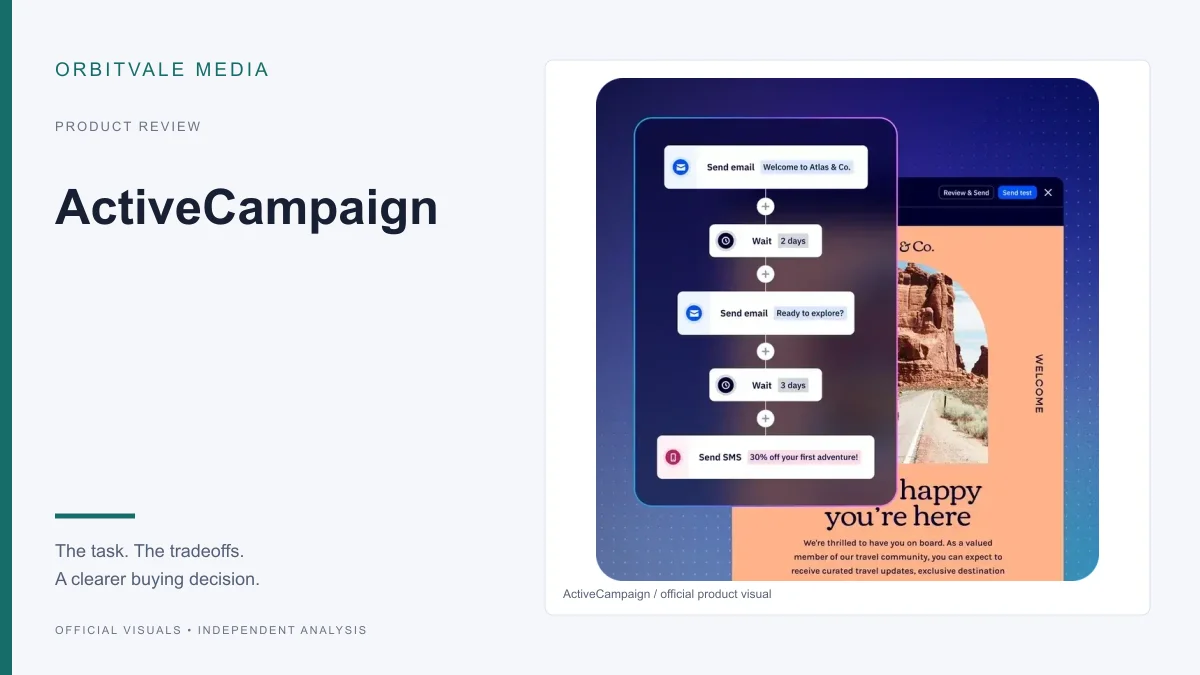
ActiveCampaign is most relevant when customer follow-up depends on several signals rather than a single newsletter list. Purchases, engagement, preferences and sales activity can inform a more deliberate next message. The value comes from a usable customer state and understandable automation logic, not from creating the largest possible decision tree.
We would shortlist it when the business can name a recurring coordination problem: a buyer receives a prospect offer, a rep cannot see marketing context or repeat customers need different education. Before expanding automation, establish who owns each field and how a person leaves a sequence after their situation changes.
Table of Contents
The buying decision
| Put it on the shortlist when | Choose another route when |
|---|---|
| A growing business coordinating lifecycle email, segmentation and selected sales handoffs with a responsible automation owner. | A simple occasional newsletter needing very little branching, or a team whose customer data and messaging rules remain undocumented. |
A realistic job for ActiveCampaign
A premium coffee equipment store combines consumer orders and wholesale inquiries. The proposed pilot separates buyers from prospects, gives repeat customers maintenance advice and creates a sales follow-up only for a qualified trade request. Marketing engagement is context, not proof of purchase intent.
What the capabilities mean in practice
Marketing automation
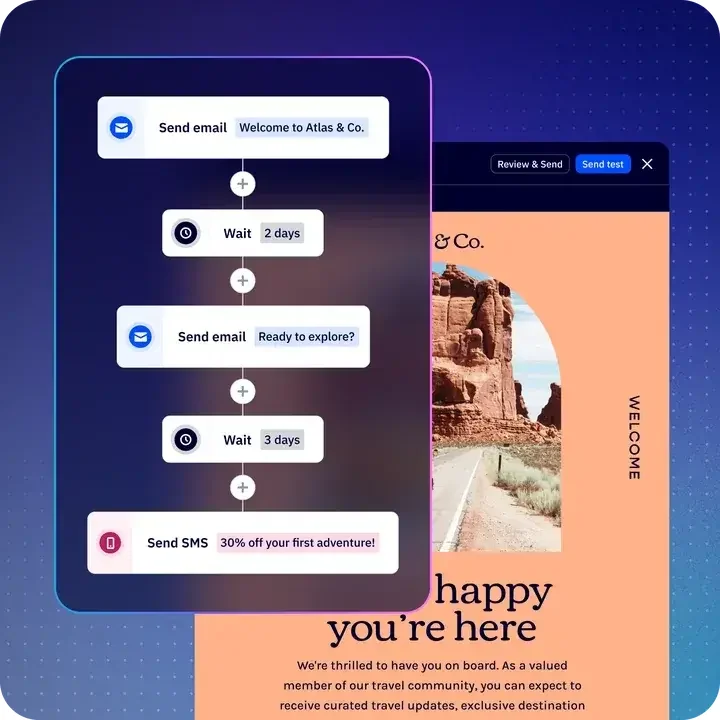
ActiveCampaign offers event- and condition-driven marketing automation. Official product overview.
Use a small state model with explicit exits. A complex flow that nobody can explain becomes expensive to change.
Customer segmentation
The platform supports contact and audience organization. Official product overview.
Define the source of each field and its freshness. An old interest tag should not permanently outweigh a recent purchase.
Connected channels and CRM needs
The offering spans several customer engagement capabilities. Official product overview.
Confirm current packaging for sales, messaging and data needs. A broad platform description is not a complete plan quote.
Ecommerce connections
Official material describes connections with ecommerce systems. Official product overview.
Test events and identity with the actual store configuration, including partial refunds and changed email addresses.
Current plan boundaries
Selected contact volume, marketing tier, send allowances, seats and AI credits affect price. Starter/Plus/Pro/Enterprise differ in segmentation, attribution, seats, CRM capability and limits. Additional channels and credits should be budgeted explicitly. Official plan source.
- The pricing page's dynamic currency amounts did not resolve in the text view; avoid inventing a starting amount.
- At the shown 1,000-contact setting, tiers have different monthly email allowances and included seats. CRM and additional channels should not be assumed to be identical across tiers.
The snapshot above is tied to the review date. Promotions, billing interval, location and account migration can change the payable amount. The decision below uses the cost drivers rather than pretending a headline fee describes every configuration.
A practical evaluation sequence
Use the following as a proposed pilot. Keep source inputs and accepted outputs so another person can review the result. The sequence is designed around the task above; it is not a claim that OrbitVale ran an account test.
1. Name customer states
Use a manageable set such as prospect, first buyer, repeat buyer and trade lead. Document transitions and exceptions.
2. Assign field ownership
The store owns purchases; a salesperson owns qualification; the preference centre owns expressed interests. Avoid competing writers.
3. Build one transition
Move a first buyer into relevant education and stop the prospect discount. Test the state before adding more messages.
4. Rehearse an exception
Create an order cancellation and a late event. Inspect whether the contact lands in the correct state.
5. Review combined messaging
Look at all scheduled campaigns for one customer. Resolve duplicate promotions and conflicting calls to action.
6. Transfer ownership
Have another operator explain the flow, disable one message and trace the source of a customer field.
The operating details that decide the fit
Define the customer state before the message
A useful lifecycle programme needs a small set of states that change the next action: prospect, first buyer, repeat buyer or inactive customer, for example. Each state should come from a maintained source. A click is an engagement signal, while a completed purchase belongs to the order system.
Write the transition and exit conditions. A customer who buys should not continue receiving a first-order pitch simply because the automation started earlier. A returned order may need another treatment. Keep late events and changed email addresses in the evaluation.
Review the combined contact calendar
Individual flows can look reasonable while the customer receives too many messages overall. Inspect one representative customer’s scheduled campaigns, automations and service communication together. Decide which message has priority when several purposes compete.
Use explicit suppression and preference rules. Unsubscribing should affect the appropriate future communication, including queued automated sends. Required order communication and promotional contact have different purposes; keep the system and the customer explanation clear.
Use metrics with an honest denominator
A sent email is not an accepted business outcome. Keep delivery, relevant engagement and downstream action separate. Opens can be affected by privacy and automated activity, while clicks can also include non-human behaviour. Interpret them with replies, purchases or qualified leads where appropriate.
When possible, compare an appropriate holdout or stable period rather than crediting every later order to the message. Label observational results as such. The aim is to learn what helps customers, not maximize the apparent revenue assigned to one tool.
Keep a maintainable template and event map
Record sender identity, audience source, event names, plan requirements and the person who owns each flow. A second operator should be able to change an offer and trace why a customer entered a sequence.
Review seasonal campaigns and inactive automations. An old discount or obsolete resource can remain live long after the original project ends. The subscription comparison should include this routine maintenance as well as writing and design.
Tradeoffs and reasons to reject the fit
Automation accumulation
Old branches can remain active after campaigns change. Review flow purpose and owners regularly.
False intent
An email click may reflect curiosity or a security scanner. Use a sensible qualification process before sales action.
Plan complexity
The total configuration may involve multiple capabilities and limits. Obtain the price for the complete workflow.
Pricing the complete job
Contacts, entitlements and maintenance
An illustrative lifecycle programme with five flows needs time for event checks, suppression and seasonal edits. If each flow consumes 30 minutes of maintenance per month, that is 2.5 hours before campaigns. Compare the actual subscription and feature tier with the manual coordination it replaces, and retain a budget for customer-data cleanup.
| Cost line | Include in the estimate |
|---|---|
| Required subscription | Use the tier that contains the actual workflow and record currency, billing interval and team size. |
| Variable services | Count the real billing unit and separately priced carrier, payment, communication or model services. |
| Setup and change | Include source cleanup, integration, training and the first meaningful revision. |
| Review and exceptions | Budget the people who approve outputs, investigate discrepancies and complete customer follow-up. |
| What disappears | Only count a saving when the old subscription or manual task can actually be retired. |
Keep a normal-month estimate and a busy-month estimate. Use the same accepted outcome in both. If the tool produces an intermediate draft, alert, record or label, include the remaining work needed to complete the customer or publishing task. Replace the example assumptions with your own observed figures after the pilot.
Alternatives and the boundary between jobs
GetResponse
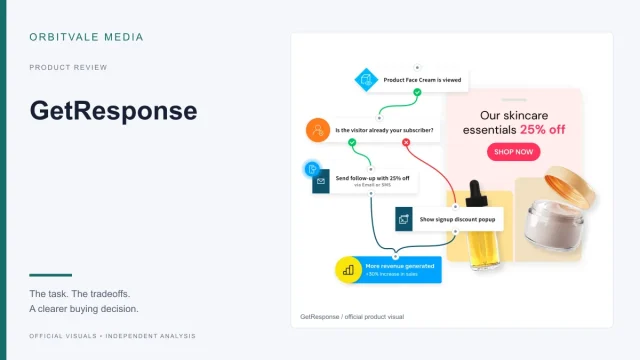
Read the GetResponse review. A small ecommerce or knowledge business combining acquisition pages with permission-based email and a manageable automation programme.
GetResponse is a sensible shortlist when email marketing and lead capture currently live in disconnected tools. Forms, landing pages and automations can support one customer journey from initial interest to a useful follow-up. The important question is whether the chosen plan covers the actual journey, including ecommerce events and the maintenance of customer permission.
Brevo
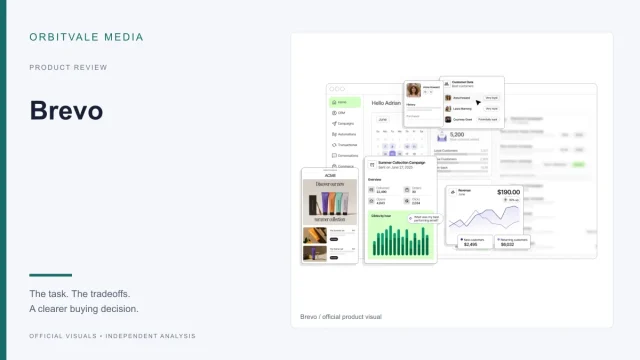
Read the Brevo review. A small business evaluating email and customer messaging with a clear contact count, send pattern and consent record.
Brevo is worth considering when a business needs permission-based messaging and wants to compare cost through its actual sending pattern. The platform covers more than email, but purchasing decisions should begin with the specific channel and customer journey required. A large send allowance does not automatically include the necessary automation, contacts or transactional setup.
Pipedrive
Read the Pipedrive review. A small sales team managing opportunities, activities and customer context with explicit ownership.
Pipedrive fits a business that knows it needs a reliable sales process but does not want opportunity follow-up scattered across inboxes and memory. A visual pipeline is useful when stages describe evidence about a deal and every active opportunity has an owner and next action. Moving cards is not progress unless the customer relationship changes.
A decision record to keep
For ActiveCampaign, record the selected account and plan, the specific job, the accepted output and the unresolved limitation. The acceptance decision should explain whether “automation accumulation” is manageable for this business. Name the owner of the next review and preserve the result of the changed-case exercise, not only the easiest first pass.
Our recommendation
ActiveCampaign is worth a deliberate trial when this describes your business: A growing business coordinating lifecycle email, segmentation and selected sales handoffs with a responsible automation owner. The case is weaker when this remains true: A simple occasional newsletter needing very little branching, or a team whose customer data and messaging rules remain undocumented. Start with the bounded scenario, price the complete job and expand after the team can explain the exceptions. Open the official ActiveCampaign website.
Sources, image credits and scope
OrbitVale’s analysis combines official product information with proposed operating exercises. We have not represented these exercises as hands-on tests, measured vendor results or customer case studies. Calculations use stated assumptions. Product and plan sources were reviewed on November 4, 2026.
ActiveCampaign: Official overview · Current pricing.
Official visuals are credited beside each figure; they are vendor-published material, not independent test screenshots. Interactive plan displays and account-specific terms can differ. Confirm checkout, region and required entitlements before purchasing. See our editorial method and commercial disclosure.