Research-based product review · 8 min read · Source check: November 4, 2026
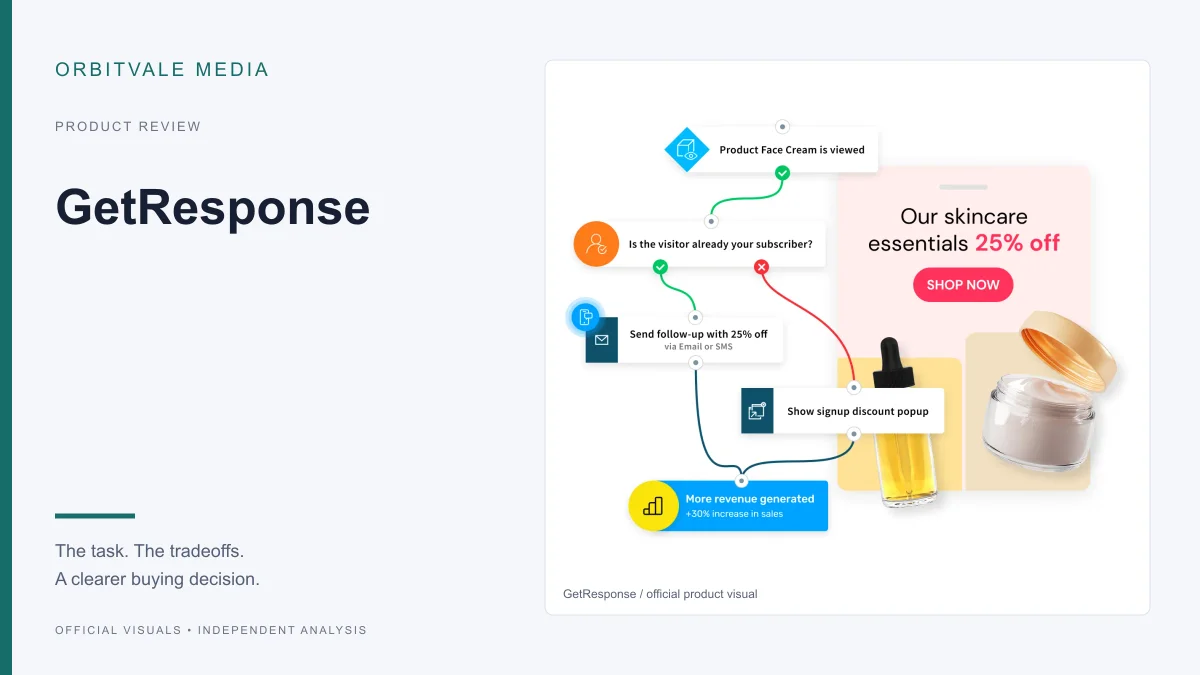
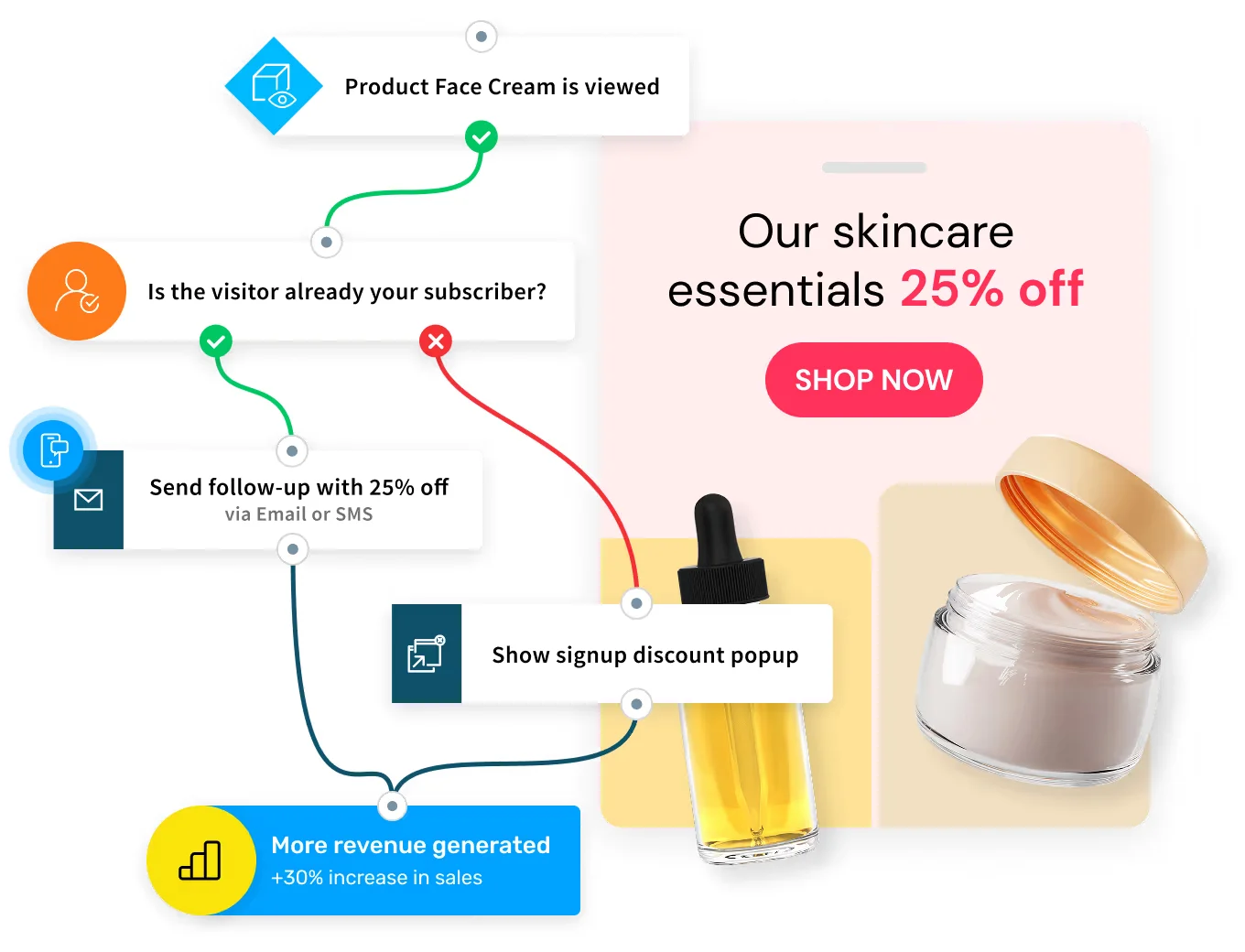
GetResponse is a sensible shortlist when email marketing and lead capture currently live in disconnected tools. Forms, landing pages and automations can support one customer journey from initial interest to a useful follow-up. The important question is whether the chosen plan covers the actual journey, including ecommerce events and the maintenance of customer permission.
We would assess a complete first-order sequence rather than compare templates in isolation. A tool that makes the page and email easier to produce can still fail the task if the customer record is incomplete or an existing buyer receives an inappropriate acquisition message. Plan entitlement and event quality matter more than a broad feature count.
Table of Contents
The buying decision
| Put it on the shortlist when | Choose another route when |
|---|---|
| A small ecommerce or knowledge business combining acquisition pages with permission-based email and a manageable automation programme. | A team expecting every cart, transactional and channel feature in the entry plan, or one with no reliable customer event and consent records. |
A realistic job for GetResponse
A kitchenware brand offers a care guide, then helps subscribers choose a compatible product. The proposed workflow captures permission, records the guide requested and changes the follow-up after purchase. Buyers should receive useful care content instead of another first-order discount.
What the capabilities mean in practice
Acquisition pages and forms
GetResponse offers forms and landing-page capabilities. Official product overview.
Test the full mobile path, including confirmation and the record created downstream. A beautiful page with poor attribution is difficult to improve.
Email production
The platform supports newsletters and email campaigns. Official product overview.
Create a real product message with the intended sender identity, preference options and mobile layout. Judge readability as well as design flexibility.
Automation
The current plans distinguish the number and depth of automated workflows. Official product overview.
Check the required welcome, purchase and recovery events against the exact tier. Avoid assuming unlimited advanced automation in Starter.
Creator products
The offering extends into knowledge and creator business features. Official product overview.
Verify checkout, product delivery and the selected plan before treating the suite as a complete digital product business.
Current plan boundaries
Plan and contact/list-size selection with monthly or annual billing; regional currency. Starter currently includes one custom automation workflow, while Marketer lists unlimited workflows and abandoned-cart recovery. Creator adds webinars, course creation and premium newsletters. Official plan source.
- Do not imply that cart recovery, advanced segmentation or every ecommerce feature is in Starter.
- Enterprise is quoted; transactional email and SMS appear in the enterprise feature list, so confirm the required channel and plan.
The snapshot above is tied to the review date. Promotions, billing interval, location and account migration can change the payable amount. The decision below uses the cost drivers rather than pretending a headline fee describes every configuration.
A practical evaluation sequence
Use the following as a proposed pilot. Keep source inputs and accepted outputs so another person can review the result. The sequence is designed around the task above; it is not a claim that OrbitVale ran an account test.
1. Define the initial promise
Write what the subscriber receives immediately and what follow-up they agree to. Keep that wording with the source form.
2. Map customer identity
Decide which identifier connects the sign-up to a later purchase. Test an existing buyer using the same email on another device.
3. Build a short welcome path
Deliver the requested resource before selling. Use a clear next step linked to the product problem.
4. Add the purchase exit
A successful order should change the message sequence. Test a delayed purchase event and a refunded order.
5. Verify suppression
Unsubscribe from the test account and confirm the change reaches every relevant campaign audience.
6. Compare accepted outcomes
Track valid sign-ups, relevant follow-up and correctly handled purchases. Do not judge the programme on send volume alone.
The operating details that decide the fit
Define the customer state before the message
A useful lifecycle programme needs a small set of states that change the next action: prospect, first buyer, repeat buyer or inactive customer, for example. Each state should come from a maintained source. A click is an engagement signal, while a completed purchase belongs to the order system.
Write the transition and exit conditions. A customer who buys should not continue receiving a first-order pitch simply because the automation started earlier. A returned order may need another treatment. Keep late events and changed email addresses in the evaluation.
Review the combined contact calendar
Individual flows can look reasonable while the customer receives too many messages overall. Inspect one representative customer’s scheduled campaigns, automations and service communication together. Decide which message has priority when several purposes compete.
Use explicit suppression and preference rules. Unsubscribing should affect the appropriate future communication, including queued automated sends. Required order communication and promotional contact have different purposes; keep the system and the customer explanation clear.
Use metrics with an honest denominator
A sent email is not an accepted business outcome. Keep delivery, relevant engagement and downstream action separate. Opens can be affected by privacy and automated activity, while clicks can also include non-human behaviour. Interpret them with replies, purchases or qualified leads where appropriate.
When possible, compare an appropriate holdout or stable period rather than crediting every later order to the message. Label observational results as such. The aim is to learn what helps customers, not maximize the apparent revenue assigned to one tool.
Keep a maintainable template and event map
Record sender identity, audience source, event names, plan requirements and the person who owns each flow. A second operator should be able to change an offer and trace why a customer entered a sequence.
Review seasonal campaigns and inactive automations. An old discount or obsolete resource can remain live long after the original project ends. The subscription comparison should include this routine maintenance as well as writing and design.
Tradeoffs and reasons to reject the fit
Entry-plan assumptions
Advanced recovery and workflow capacity can require a higher tier. Price the required journey, not the lowest number on the page.
Identity fragmentation
An acquisition tool cannot fix duplicated customer records by itself. Establish how sign-ups and orders are joined.
Campaign overlap
Several independently built flows may send competing offers. Review the customer’s combined message calendar.
Pricing the complete job
Contacts, selected features and operating time
With 5,000 contacts and a weekly campaign, a planning month may involve roughly 20,000 campaign sends before welcome, recovery and transactional activity. Confirm how the selected plan counts contacts and sends. Add creative work, event integration and the cost of the higher tier if the required recovery flow is excluded from entry pricing.
| Cost line | Include in the estimate |
|---|---|
| Required subscription | Use the tier that contains the actual workflow and record currency, billing interval and team size. |
| Variable services | Count the real billing unit and separately priced carrier, payment, communication or model services. |
| Setup and change | Include source cleanup, integration, training and the first meaningful revision. |
| Review and exceptions | Budget the people who approve outputs, investigate discrepancies and complete customer follow-up. |
| What disappears | Only count a saving when the old subscription or manual task can actually be retired. |
Keep a normal-month estimate and a busy-month estimate. Use the same accepted outcome in both. If the tool produces an intermediate draft, alert, record or label, include the remaining work needed to complete the customer or publishing task. Replace the example assumptions with your own observed figures after the pilot.
Alternatives and the boundary between jobs
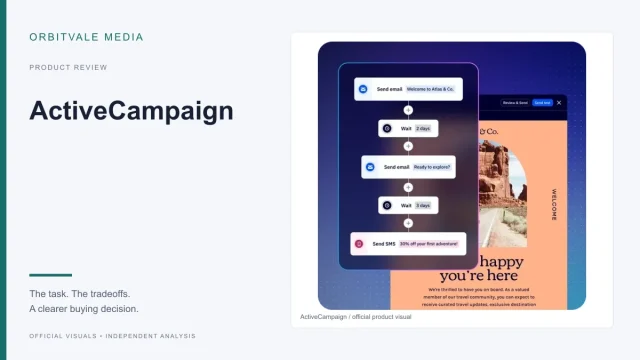
ActiveCampaign
Read the ActiveCampaign review. A growing business coordinating lifecycle email, segmentation and selected sales handoffs with a responsible automation owner.
ActiveCampaign is most relevant when customer follow-up depends on several signals rather than a single newsletter list. Purchases, engagement, preferences and sales activity can inform a more deliberate next message. The value comes from a usable customer state and understandable automation logic, not from creating the largest possible decision tree.
Brevo
Read the Brevo review. A small business evaluating email and customer messaging with a clear contact count, send pattern and consent record.
Brevo is worth considering when a business needs permission-based messaging and wants to compare cost through its actual sending pattern. The platform covers more than email, but purchasing decisions should begin with the specific channel and customer journey required. A large send allowance does not automatically include the necessary automation, contacts or transactional setup.
Kit
Read the Kit review. A creator building a permission-based audience around knowledge, content or digital products.
Kit is a useful shortlist for creators whose email relationship sits close to their product business. A subscriber may move from an educational sequence to a digital product, paid content or recurring offer. The workflow benefits from clear audience interests and a sensible distinction between a reader and a paying customer.
A decision record to keep
For GetResponse, record the selected account and plan, the specific job, the accepted output and the unresolved limitation. The acceptance decision should explain whether “entry-plan assumptions” is manageable for this business. Name the owner of the next review and preserve the result of the changed-case exercise, not only the easiest first pass.
Our recommendation
GetResponse is worth a deliberate trial when this describes your business: A small ecommerce or knowledge business combining acquisition pages with permission-based email and a manageable automation programme. The case is weaker when this remains true: A team expecting every cart, transactional and channel feature in the entry plan, or one with no reliable customer event and consent records. Start with the bounded scenario, price the complete job and expand after the team can explain the exceptions. Open the official GetResponse website.
Sources, image credits and scope
OrbitVale’s analysis combines official product information with proposed operating exercises. We have not represented these exercises as hands-on tests, measured vendor results or customer case studies. Calculations use stated assumptions. Product and plan sources were reviewed on November 4, 2026.
GetResponse: Official overview · Current pricing.
Official visuals are credited beside each figure; they are vendor-published material, not independent test screenshots. Interactive plan displays and account-specific terms can differ. Confirm checkout, region and required entitlements before purchasing. See our editorial method and commercial disclosure.