Research-based product review · 7 min read · Source check: November 4, 2026
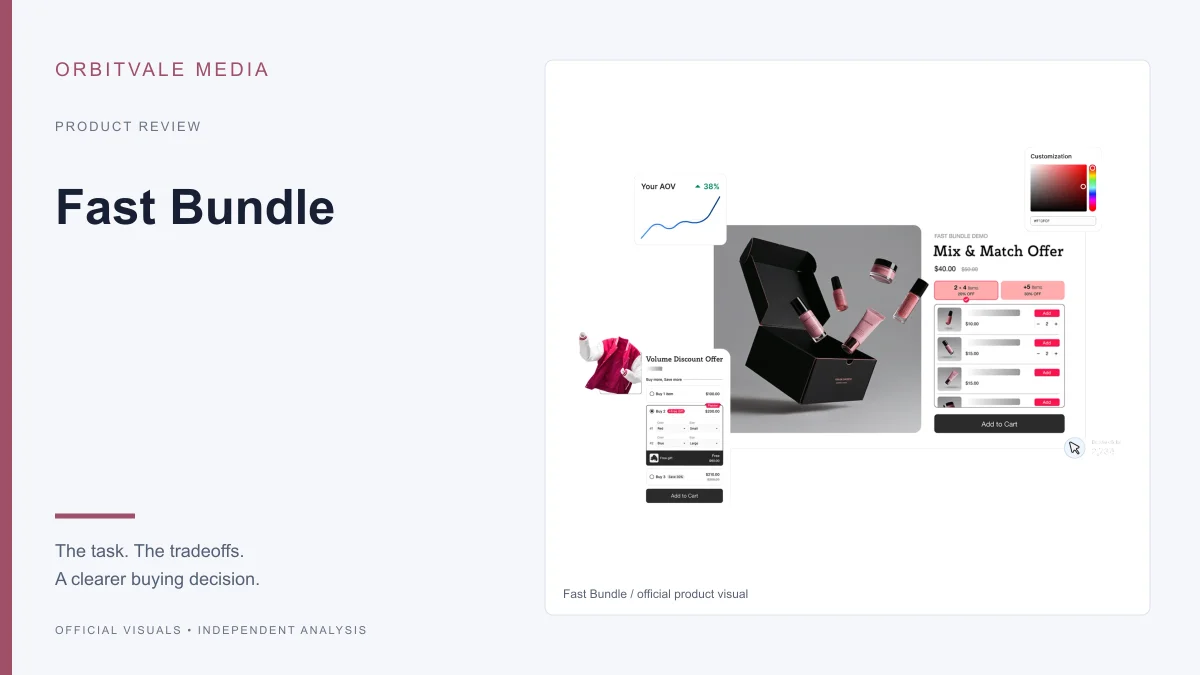
Fast Bundle is relevant to Shopify merchants who want to sell products together through bundles, quantity offers or related promotions. The right evaluation is not simply whether the average basket grows. Discounts, component stock, returns and fulfilment work determine whether the offer is commercially useful.
We would select one customer problem that a bundle solves naturally: a compatible starter kit, a replenishment multipack or a complementary set. Test the checkout and component ledger with the actual theme and apps. A bundle should simplify the customer’s decision without hiding what they receive or eroding contribution.
Table of Contents
The buying decision
| Put it on the shortlist when | Choose another route when |
|---|---|
| A Shopify store with complementary products, reliable component stock and a known margin floor. | A store using discounts to compensate for unclear product value, or one unable to reconcile component quantities after purchases and returns. |
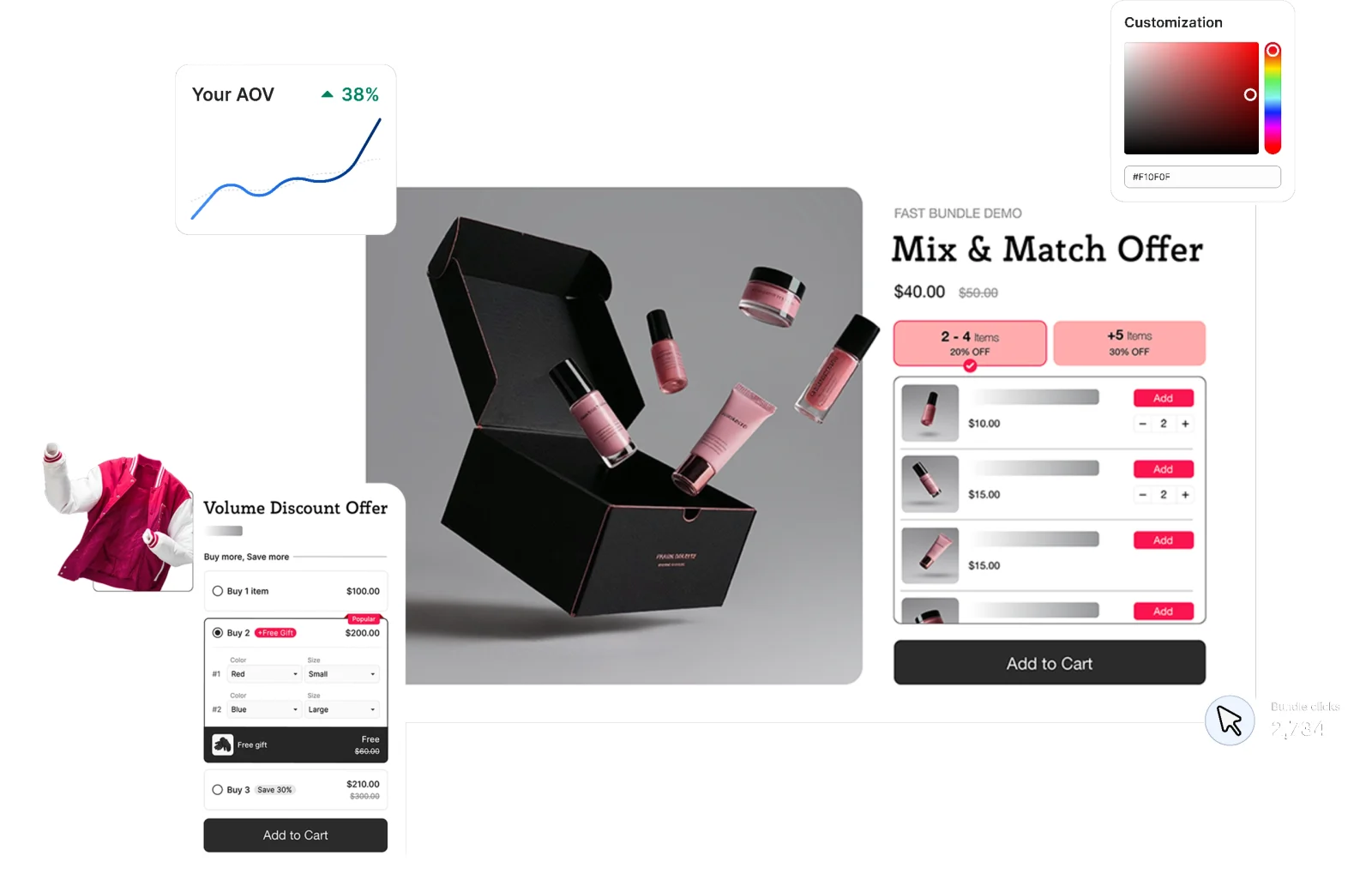
A realistic job for Fast Bundle
A desk accessories shop offers a planner, pen and refill pack together. The proposed trial includes an out-of-stock refill, another active discount and a customer returning one component. The merchant should be able to explain both the offer and the stock movement.
What the capabilities mean in practice
Bundle offers
Fast Bundle offers Shopify bundling and discount-related capabilities. Official product overview.
Choose the offer type that matches a real shopping task. A product set and a quantity break solve different questions.
Storefront presentation
The app provides customer-facing bundle experiences. Official product overview.
Inspect mobile clarity, variant selection and how the price is explained. A customer should understand the saving and included items.
Component operations
Bundle sales interact with underlying products and inventory. Official product overview.
Test the actual component mapping, fulfilment and partial-return behaviour. Do not assume every bundle architecture behaves identically.
Current plans
The official listing and pricing describe plan-dependent features and limits. Official product overview.
Confirm eligibility for the exact offer, revenue band and store configuration before estimating cost.
Current plan boundaries
Standard pricing scales with monthly revenue attributed to bundles. The current monthly brackets show $19 up to $1,000, $49 up to $3,000 and $139 up to $10,000 bundle revenue. Enterprise includes additional cart/POS/customization capabilities. Annual rates differ. Official plan source.
- The Free plan is for development stores and eligible merchants and has a $500 monthly bundle-sales allowance.
- Revenue growth can move the store into another fee tier. Evaluate contribution margin after discounts, fulfilment and app cost rather than AOV alone.
The snapshot above is tied to the review date. Promotions, billing interval, location and account migration can change the payable amount. The decision below uses the cost drivers rather than pretending a headline fee describes every configuration.
A practical evaluation sequence
Use the following as a proposed pilot. Keep source inputs and accepted outputs so another person can review the result. The sequence is designed around the task above; it is not a claim that OrbitVale ran an account test.
1. Set the margin floor
Calculate contribution after product cost, shipping support, payment fees and expected returns.
2. Choose one natural set
Use products that work together for a clear customer need. Explain the role of each item.
3. Test variant choices
Use a mixed variant basket and an unavailable component. The customer should not buy an impossible combination.
4. Combine a second offer
Check the store’s discount and free-shipping rules. Unexpected stacking can erase the intended margin.
5. Return one component
Follow refund allocation, remaining stock and customer explanation through the actual operation.
6. Judge the whole result
Compare contribution per order, component sell-through and service work, not just the larger basket total.
The operating details that decide the fit
Choose a customer task, not only a discount
A useful starter kit or replenishment pack simplifies a real decision. Explain why the items belong together and who should choose the individual product instead. This makes the offer readable without relying on an exaggerated saving.
Use the actual variant and compatibility rules. A customer should not be able to select a set whose components cannot be used together or fulfilled from available stock.
Calculate contribution after the whole offer
Include product cost, discount, payment fees, fulfilment support and expected returns. A larger basket can still contribute less than the original purchase. Check how free-shipping thresholds and other promotions interact.
Set the margin floor before testing the offer. If several discounts stack, evaluate the combined price rather than each promotion independently.
Follow components into fulfilment and returns
Test how the bundle maps to underlying SKUs. Staff need to know which items to pick, how stock is decremented and what happens when one component is unavailable.
Process a partial return in the evaluation. The refund allocation should be explainable to both the customer and the ledger. Avoid restoring a damaged component automatically to sellable stock.
Measure more than average order value
Use contribution per order, units per component, return behaviour and customer questions. A bundle that clears one item while repeatedly stranding another can create new stock problems.
Keep the offer period and audience comparable when interpreting results. If a promotion changes alongside advertising and shipping rules, avoid assigning the whole change to the bundle app.
Tradeoffs and reasons to reject the fit
Discount leakage
A bundle can lift revenue while lowering profit. Model the exact combined promotion.
Stock distortion
Incorrect component treatment can oversell one item or strand another.
Awkward returns
Partial refunds need an understandable price allocation and operating process.
Pricing the complete job
Incremental contribution
An illustrative $70 basket with $32 product cost, $7 fulfilment support and $3 payment cost leaves $28 before marketing and returns. A $10 bundle discount leaves $18 unless costs or added items change. Use the real bundle economics and app tier; average order value alone does not settle whether the offer is good.
| Cost line | Include in the estimate |
|---|---|
| Required subscription | Use the tier that contains the actual workflow and record currency, billing interval and team size. |
| Variable services | Count the real billing unit and separately priced carrier, payment, communication or model services. |
| Setup and change | Include source cleanup, integration, training and the first meaningful revision. |
| Review and exceptions | Budget the people who approve outputs, investigate discrepancies and complete customer follow-up. |
| What disappears | Only count a saving when the old subscription or manual task can actually be retired. |
Keep a normal-month estimate and a busy-month estimate. Use the same accepted outcome in both. If the tool produces an intermediate draft, alert, record or label, include the remaining work needed to complete the customer or publishing task. Replace the example assumptions with your own observed figures after the pilot.
Alternatives and the boundary between jobs
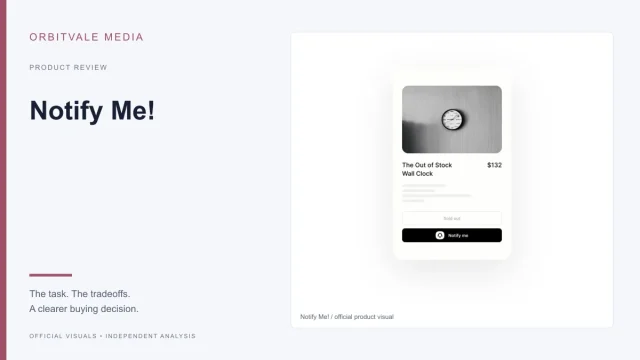
Notify Me!
Read the Notify Me! review. A Shopify merchant with recurring stockouts, predictable replenishment and a person responsible for customer-facing availability.
Notify Me! addresses a clear Shopify problem: interested customers arrive when a product cannot be bought through the normal in-stock path. Back-in-stock alerts, preorders and wishlists can keep that interest connected to a later action. Their value depends on the reliability of the availability promise and the way returning customers are treated.
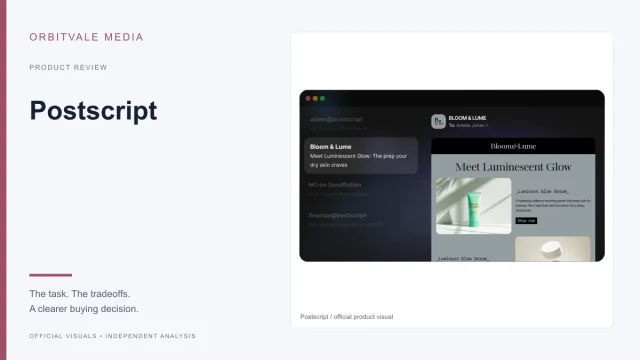
Postscript
Read the Postscript review. A Shopify brand with explicit SMS permission, a relevant recurring use case and an owner monitoring message economics.
Postscript is a relevant specialist shortlist for a Shopify merchant treating SMS as an intentional customer channel. The strongest use is a timely, useful message supported by clear permission and reliable store context. Sending a promotion more directly does not make it more welcome, and carrier charges change the economics of a busy campaign.
Printify
Read the Printify review. A creator or brand testing a focused print-on-demand range with a margin model and willingness to review samples.
Printify is relevant when a brand wants to sell printed products without holding the full finished-goods catalogue. Its provider network makes product and fulfilment choices part of the operating model. The business still owns the customer promise, even when another company produces and dispatches the item.
A decision record to keep
For Fast Bundle, record the selected account and plan, the specific job, the accepted output and the unresolved limitation. The acceptance decision should explain whether “discount leakage” is manageable for this business. Name the owner of the next review and preserve the result of the changed-case exercise, not only the easiest first pass.
Our recommendation
Fast Bundle is worth a deliberate trial when this describes your business: A Shopify store with complementary products, reliable component stock and a known margin floor. The case is weaker when this remains true: A store using discounts to compensate for unclear product value, or one unable to reconcile component quantities after purchases and returns. Start with the bounded scenario, price the complete job and expand after the team can explain the exceptions. Open the official Fast Bundle website.
Sources, image credits and scope
OrbitVale’s analysis combines official product information with proposed operating exercises. We have not represented these exercises as hands-on tests, measured vendor results or customer case studies. Calculations use stated assumptions. Product and plan sources were reviewed on November 4, 2026.
Fast Bundle: Official overview · Current pricing.
Official visuals are credited beside each figure; they are vendor-published material, not independent test screenshots. Interactive plan displays and account-specific terms can differ. Confirm checkout, region and required entitlements before purchasing. See our editorial method and commercial disclosure.