Research-based product review · 7 min read · Source check: November 4, 2026
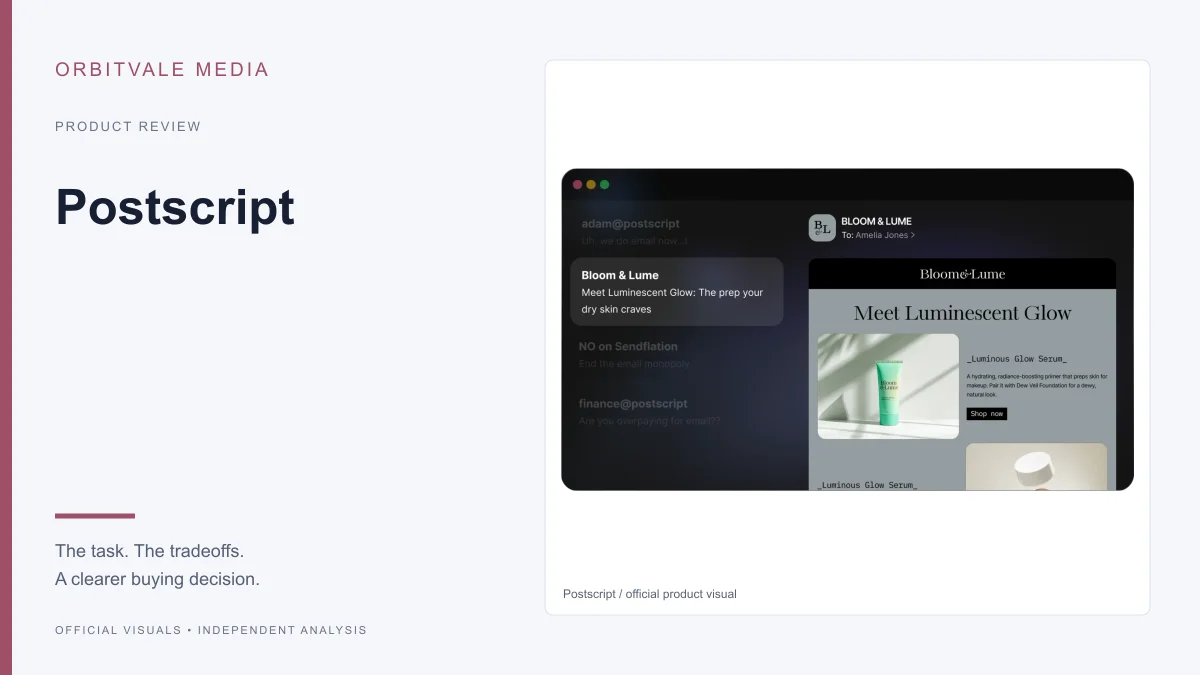
Postscript is a relevant specialist shortlist for a Shopify merchant treating SMS as an intentional customer channel. The strongest use is a timely, useful message supported by clear permission and reliable store context. Sending a promotion more directly does not make it more welcome, and carrier charges change the economics of a busy campaign.
We would begin with one narrow journey, an agreed contact policy and a contribution target. Evaluate opt-out behaviour, link destination, message segments and follow-up work. SMS should earn its place alongside email, stock alerts and customer service rather than duplicate every campaign.
Table of Contents
The buying decision
| Put it on the shortlist when | Choose another route when |
|---|---|
| A Shopify brand with explicit SMS permission, a relevant recurring use case and an owner monitoring message economics. | A list assembled without appropriate permission, a plan to mirror every email campaign by text, or a buyer counting only the platform subscription. |

A realistic job for Postscript
A cosmetics store plans a replenishment reminder for customers who requested SMS. The proposed pilot excludes returned orders, respects a recent opt-out and uses a landing page with the exact relevant product. Results are compared after carrier and message costs.
What the capabilities mean in practice
Shopify context
Postscript focuses on SMS-related ecommerce workflows. Official product overview.
Use real order and customer information to keep messages relevant. A platform connection does not replace an audience policy.
Campaigns and automations
The product offers SMS campaign and journey capabilities. Official product overview.
Start with one useful trigger and a clear exit. Avoid a customer receiving a campaign and automated reminder for the same purpose.
Permission and responses
The channel requires a maintained consent and opt-out process. Official product overview.
Test the actual customer experience and current applicable rules. Keep help and response ownership visible.
Usage pricing
The current pricing includes message charges, carrier fees and selected minimums. Official product overview.
Check destination, message type, segmentation and minimum-spend treatment in the account quote.
Current plan boundaries
Platform fees plus per-message charges and carrier fees. Starter has a $0 platform fee but a $49 monthly minimum spend. Growth and Professional have platform fees and different SMS/MMS rates. Rates shown are scoped to the US/Canada. Official plan source.
- A $0 platform fee does not mean free sending. Carrier fees and message segmentation materially affect campaign cost.
- Professional includes custom integration API access in the published plan list; email, managed services and other products should be scoped separately.
The snapshot above is tied to the review date. Promotions, billing interval, location and account migration can change the payable amount. The decision below uses the cost drivers rather than pretending a headline fee describes every configuration.
A practical evaluation sequence
Use the following as a proposed pilot. Keep source inputs and accepted outputs so another person can review the result. The sequence is designed around the task above; it is not a claim that OrbitVale ran an account test.
1. Define the contact rule
Specify purpose, audience, frequency and suppression. Include a customer who already received another recent message.
2. Verify permission records
Keep source and timestamp information and test preference changes before expanding the audience.
3. Build a useful message
Use clear sender context, a relevant destination and a concise promise. Check the complete rendered text.
4. Count actual units
Inspect links, special characters and message length. Confirm how the selected account prices the resulting message.
5. Test opt-out and replies
Use approved test numbers and verify suppression and response routing. Keep service ownership separate from campaign creation.
6. Compare contribution
Include discounts, returns, message and carrier costs. Report incremental evidence carefully when several channels contact the same customer.
The operating details that decide the fit
Define a channel purpose
SMS should have a reason to interrupt the customer. A relevant availability or replenishment message can be useful; repeating every email promotion can quickly create fatigue. Review contact pressure across channels.
Keep permission sources and preference changes maintained. Do not infer SMS permission from an email subscription or an unrelated checkout field. Use the current rules applicable to the audience and provider.
Price the rendered message
Message composition, destination, channel and carrier charges can affect the bill. Inspect the actual text and linked content rather than multiplying recipients by a remembered headline rate.
Model normal and busy months, including required minimums. A free platform fee does not mean communication is free. Separate fixed and variable costs so the team can understand the marginal campaign.
Make opt-out and help part of the workflow
Test preference changes and the route for replies using appropriate test contacts. The customer needs a clear sender and an accountable service route. A campaign creator may not be the person who can resolve the response.
Check queued messages after a preference change. The policy should affect the future communication path, not merely update a visible profile field.
Use contribution and cautious attribution
Discounts, returns, shipping support and messaging costs all affect campaign economics. Compare contribution rather than order value alone. A customer who buys after several messages cannot automatically be credited wholly to the last text.
Use a suitable holdout when feasible and keep observational claims modest. The goal is to learn whether the channel adds useful customer value at an acceptable cost.
Tradeoffs and reasons to reject the fit
Channel fatigue
A relevant customer can still receive too many messages. Review combined contact pressure.
Attribution inflation
A purchase after a message does not prove the message caused it. Use a sensible holdout when feasible.
Unexpected charges
Destination and message composition can change cost. Price the actual campaign rather than a headline unit.
Pricing the complete job
Messages, carrier fees and margin
If 10,000 recipients each receive two billable units, the planning workload is 20,000 units before replies and retries. Multiply by the current message and carrier rates, then apply minimums correctly. Compare that cost with contribution after discounts and returns, not gross order revenue.
| Cost line | Include in the estimate |
|---|---|
| Required subscription | Use the tier that contains the actual workflow and record currency, billing interval and team size. |
| Variable services | Count the real billing unit and separately priced carrier, payment, communication or model services. |
| Setup and change | Include source cleanup, integration, training and the first meaningful revision. |
| Review and exceptions | Budget the people who approve outputs, investigate discrepancies and complete customer follow-up. |
| What disappears | Only count a saving when the old subscription or manual task can actually be retired. |
Keep a normal-month estimate and a busy-month estimate. Use the same accepted outcome in both. If the tool produces an intermediate draft, alert, record or label, include the remaining work needed to complete the customer or publishing task. Replace the example assumptions with your own observed figures after the pilot.
Alternatives and the boundary between jobs
Brevo
Read the Brevo review. A small business evaluating email and customer messaging with a clear contact count, send pattern and consent record.
Brevo is worth considering when a business needs permission-based messaging and wants to compare cost through its actual sending pattern. The platform covers more than email, but purchasing decisions should begin with the specific channel and customer journey required. A large send allowance does not automatically include the necessary automation, contacts or transactional setup.
Notify Me!
Read the Notify Me! review. A Shopify merchant with recurring stockouts, predictable replenishment and a person responsible for customer-facing availability.
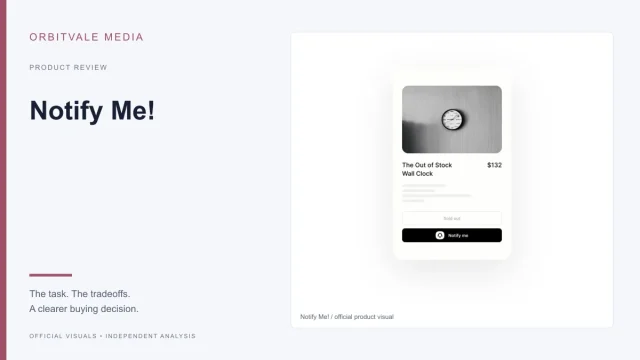
Notify Me! addresses a clear Shopify problem: interested customers arrive when a product cannot be bought through the normal in-stock path. Back-in-stock alerts, preorders and wishlists can keep that interest connected to a later action. Their value depends on the reliability of the availability promise and the way returning customers are treated.
ActiveCampaign
Read the ActiveCampaign review. A growing business coordinating lifecycle email, segmentation and selected sales handoffs with a responsible automation owner.
ActiveCampaign is most relevant when customer follow-up depends on several signals rather than a single newsletter list. Purchases, engagement, preferences and sales activity can inform a more deliberate next message. The value comes from a usable customer state and understandable automation logic, not from creating the largest possible decision tree.
A decision record to keep
For Postscript, record the selected account and plan, the specific job, the accepted output and the unresolved limitation. The acceptance decision should explain whether “channel fatigue” is manageable for this business. Name the owner of the next review and preserve the result of the changed-case exercise, not only the easiest first pass.
Our recommendation
Postscript is worth a deliberate trial when this describes your business: A Shopify brand with explicit SMS permission, a relevant recurring use case and an owner monitoring message economics. The case is weaker when this remains true: A list assembled without appropriate permission, a plan to mirror every email campaign by text, or a buyer counting only the platform subscription. Start with the bounded scenario, price the complete job and expand after the team can explain the exceptions. Open the official Postscript website.
Sources, image credits and scope
OrbitVale’s analysis combines official product information with proposed operating exercises. We have not represented these exercises as hands-on tests, measured vendor results or customer case studies. Calculations use stated assumptions. Product and plan sources were reviewed on November 4, 2026.
Postscript: Official overview · Current pricing.
Official visuals are credited beside each figure; they are vendor-published material, not independent test screenshots. Interactive plan displays and account-specific terms can differ. Confirm checkout, region and required entitlements before purchasing. See our editorial method and commercial disclosure.