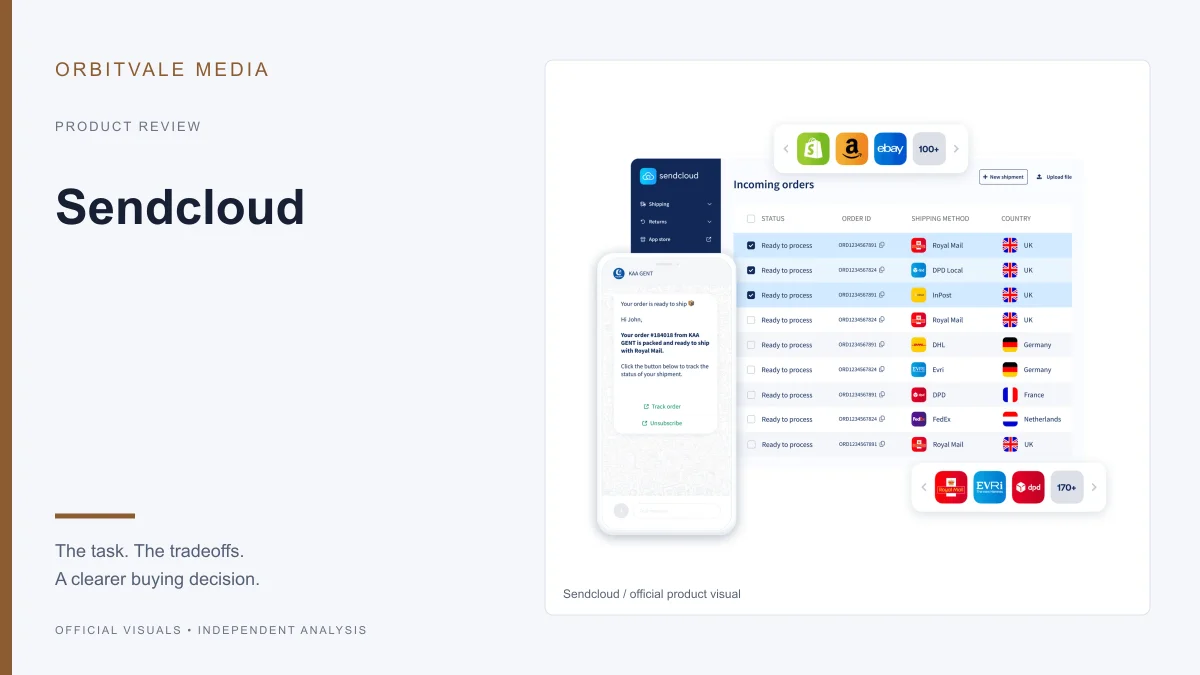
Research-based product review · 7 min read · Source check: November 4, 2026
Sendcloud is worth evaluating when a merchant’s shipping job includes operational rules, several carriers and a more deliberate post-purchase experience. The relevant comparison extends beyond printing labels to service selection, tracking and returns. Country and carrier coverage should be checked against the business’s origin markets before comparing features.
We would use a small route matrix covering common parcels and a difficult return. A shipping platform can make the process more coherent, but it cannot guarantee carrier performance or remove the need for accurate parcel data. Price the selected features and contracts together.
Table of Contents
The buying decision
| Put it on the shortlist when | Choose another route when |
|---|---|
| A merchant in supported markets needing structured shipping, carrier and post-purchase workflows. | A business outside the relevant coverage, or a buyer choosing on a headline label allowance without checking carrier contracts and return needs. |
A realistic job for Sendcloud
A European clothing brand uses two carriers and sells across several nearby markets. The proposed trial assigns a service by parcel and destination, then handles an exchange where the original tracking remains visible to the customer.
What the capabilities mean in practice
Carrier and label workflow
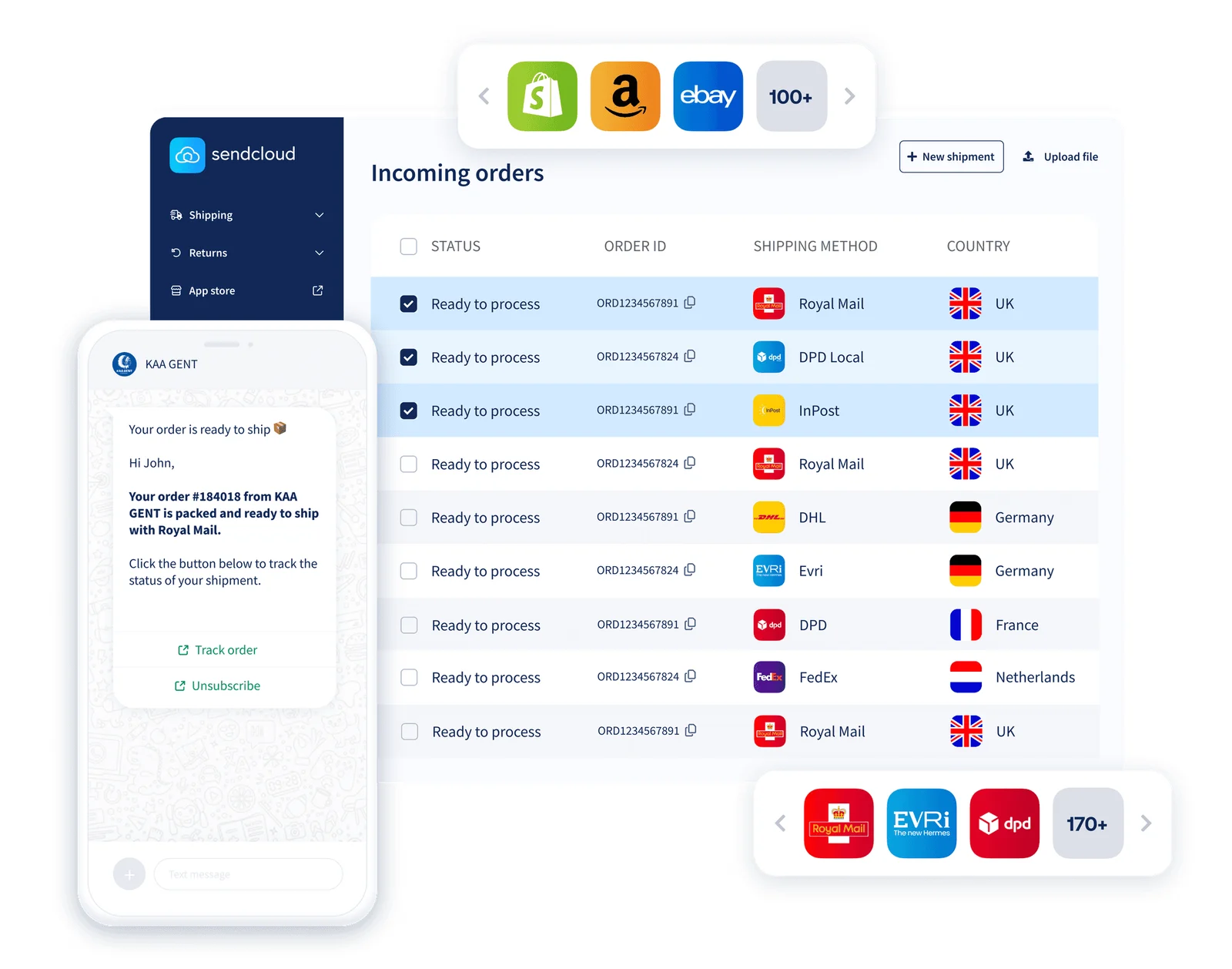
Sendcloud offers ecommerce shipping tools and carrier connections. Official product overview.
Confirm origin, destination, contract and service availability for actual shipments.
Shipping rules
The platform presents automation for shipping operations. Official product overview.
Make the priority of rules explicit. A package qualifying for two services should receive an explainable choice.
Post-purchase experience
The offering includes tracking and returns-related capabilities. Official product overview.
Test the customer-facing journey with a delayed parcel and a partial return, not just a successful dispatch.
Plan configuration
Current pricing distinguishes usage and feature entitlements. Official product overview.
Add carrier costs, selected contracts, volume and required premium features to the estimate.
Current plan boundaries
Subscription plus per-label fee and postage/carrier costs. Lite/Growth/Premium/Pro vary in user seats, integrations, shipping rules and annual label allowance. Free is limited to 20 parcels/month on the viewed page. Official plan source.
- Available carriers, own-contract options and cross-border capabilities vary by shipping origin and plan.
- Returns, branding, tracking analytics and checkout features are not identical across tiers. Compare label fees as well as the subscription.
The snapshot above is tied to the review date. Promotions, billing interval, location and account migration can change the payable amount. The decision below uses the cost drivers rather than pretending a headline fee describes every configuration.
A practical evaluation sequence
Use the following as a proposed pilot. Keep source inputs and accepted outputs so another person can review the result. The sequence is designed around the task above; it is not a claim that OrbitVale ran an account test.
1. List real routes
Use the actual origins, destinations and package profiles. Confirm the supported carrier services.
2. Set rule priorities
Write which condition wins when weight, destination and customer promise conflict.
3. Print on the warehouse setup
Check label dimensions, scanner readability and order status with the actual hardware.
4. Follow a delayed parcel
Inspect tracking messages and determine when support intervenes rather than repeating an unhelpful status.
5. Process a partial return
Confirm the item, refund or exchange decision and stock inspection. A returned parcel is not yet sellable inventory.
6. Reconcile charges
Compare platform fees, labels, carrier invoices and adjustments after the sample period.
The operating details that decide the fit
Compare an equivalent parcel and service
Use packed weight, dimensions, origin and destination. Include the common parcel and a difficult case. A cheaper quote for a different service or ineligible route is not a like-for-like saving.
Separate software fees, postage, insurance and later adjustments. A label tool can expose choices, but the merchant still needs an accurate package profile and a reason for selecting the service.
Distinguish label, dispatch and delivery
A label being created does not prove carrier acceptance. A carrier scan does not prove the customer received an undamaged item. Keep these stages separate in the customer message and internal ledger.
Test what happens after an address correction, void or replacement label. The customer should not be left tracking an obsolete reference, and staff should know whether a postage refund is requested or completed.
Make the exception path visible
Define the response to a delayed parcel, failed delivery and missing tracking update. Give support the order, service and relevant event history without requiring several disconnected searches.
For returns, distinguish parcel receipt, item inspection, refund decision and restoration to sellable stock. An exchange can create a new shipment while the original order remains part of the case.
Reconcile the carrier bill
Use a sample period to compare purchased labels, voids, adjustments and carrier charges. Measurement errors often surface later than the original rate selection. Review the packed parcel process when adjustments recur.
The appropriate platform depends on supported origins, contracts, rules and post-purchase needs. A broad carrier list should lead to a route-specific trial, not an assumption that every service is available everywhere.
Tradeoffs and reasons to reject the fit
Regional mismatch
A useful carrier portfolio in one origin country may not fit another.
Rule conflicts
An undocumented rule can select an expensive or unsuitable service.
Return shortcuts
Automatically restoring stock before inspection can make unavailable goods appear sellable.
Pricing the complete job
Platform, carrier and service work
Compare monthly software, postage, contract terms and return-related costs for the same parcel matrix. If a rule saves an assumed 45 seconds on 800 parcels, gross handling savings are ten hours. Deduct exception management and include any higher tier required for those rules.
| Cost line | Include in the estimate |
|---|---|
| Required subscription | Use the tier that contains the actual workflow and record currency, billing interval and team size. |
| Variable services | Count the real billing unit and separately priced carrier, payment, communication or model services. |
| Setup and change | Include source cleanup, integration, training and the first meaningful revision. |
| Review and exceptions | Budget the people who approve outputs, investigate discrepancies and complete customer follow-up. |
| What disappears | Only count a saving when the old subscription or manual task can actually be retired. |
Keep a normal-month estimate and a busy-month estimate. Use the same accepted outcome in both. If the tool produces an intermediate draft, alert, record or label, include the remaining work needed to complete the customer or publishing task. Replace the example assumptions with your own observed figures after the pilot.
Alternatives and the boundary between jobs
Shippo
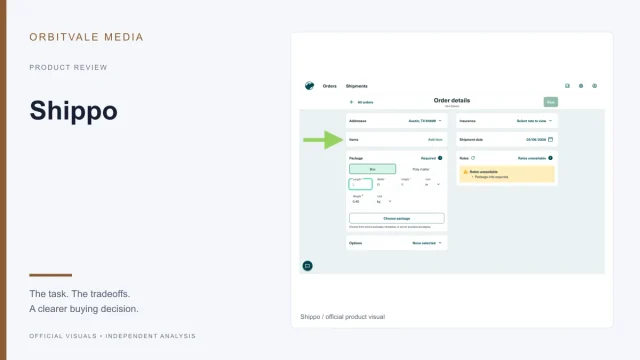
Read the Shippo review. A merchant needing a more coherent rate-and-label workflow with supported carriers and package types.
Shippo fits the practical shipping layer between an order and a parcel. Rate access, carrier connections and label workflows can simplify fulfilment for merchants that otherwise move between carrier sites. The complete decision includes address quality, package measurement, voids and customer exceptions after a label has been created.
Goflow
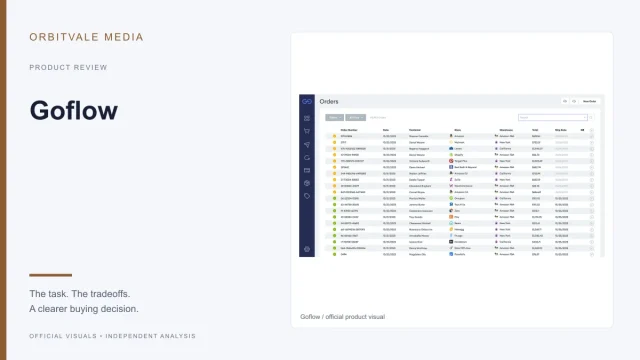
Read the Goflow review. A multichannel merchant coordinating marketplace orders, stock and shipping across several operating steps.
Goflow is relevant when a business’s operational problem crosses marketplaces, inventory and fulfilment. Bringing order activity into a coherent workflow can reduce repeated data entry and unclear handoffs. The harder issue is deciding which system owns stock and how the team recovers when a marketplace or carrier update arrives late.
Finale Inventory
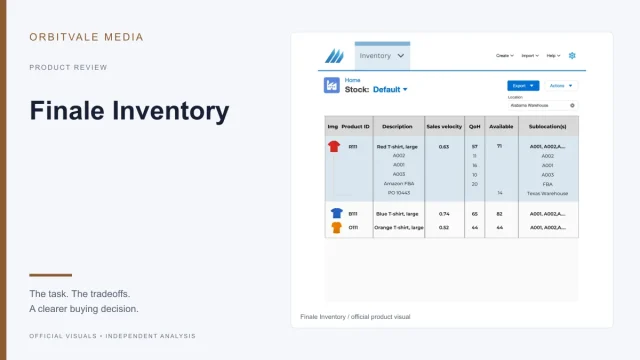
Read the Finale Inventory review. A multichannel seller needing a maintained stock ledger and clearer warehouse or order-related operations.
Finale Inventory is worth investigating when a merchant’s stock movements have outgrown a spreadsheet or disconnected channel counts. Multi-location inventory and operational workflows matter most when receiving, picking and adjustments need to agree on the same physical reality. The purchase should begin with a stock accuracy problem, not a desire for another dashboard.
A decision record to keep
For Sendcloud, record the selected account and plan, the specific job, the accepted output and the unresolved limitation. The acceptance decision should explain whether “regional mismatch” is manageable for this business. Name the owner of the next review and preserve the result of the changed-case exercise, not only the easiest first pass.
Our recommendation
Sendcloud is worth a deliberate trial when this describes your business: A merchant in supported markets needing structured shipping, carrier and post-purchase workflows. The case is weaker when this remains true: A business outside the relevant coverage, or a buyer choosing on a headline label allowance without checking carrier contracts and return needs. Start with the bounded scenario, price the complete job and expand after the team can explain the exceptions. Open the official Sendcloud website.
Sources, image credits and scope
OrbitVale’s analysis combines official product information with proposed operating exercises. We have not represented these exercises as hands-on tests, measured vendor results or customer case studies. Calculations use stated assumptions. Product and plan sources were reviewed on November 4, 2026.
Sendcloud: Official overview · Current pricing.
Official visuals are credited beside each figure; they are vendor-published material, not independent test screenshots. Interactive plan displays and account-specific terms can differ. Confirm checkout, region and required entitlements before purchasing. See our editorial method and commercial disclosure.