Research-based product review · 7 min read · Source check: November 4, 2026
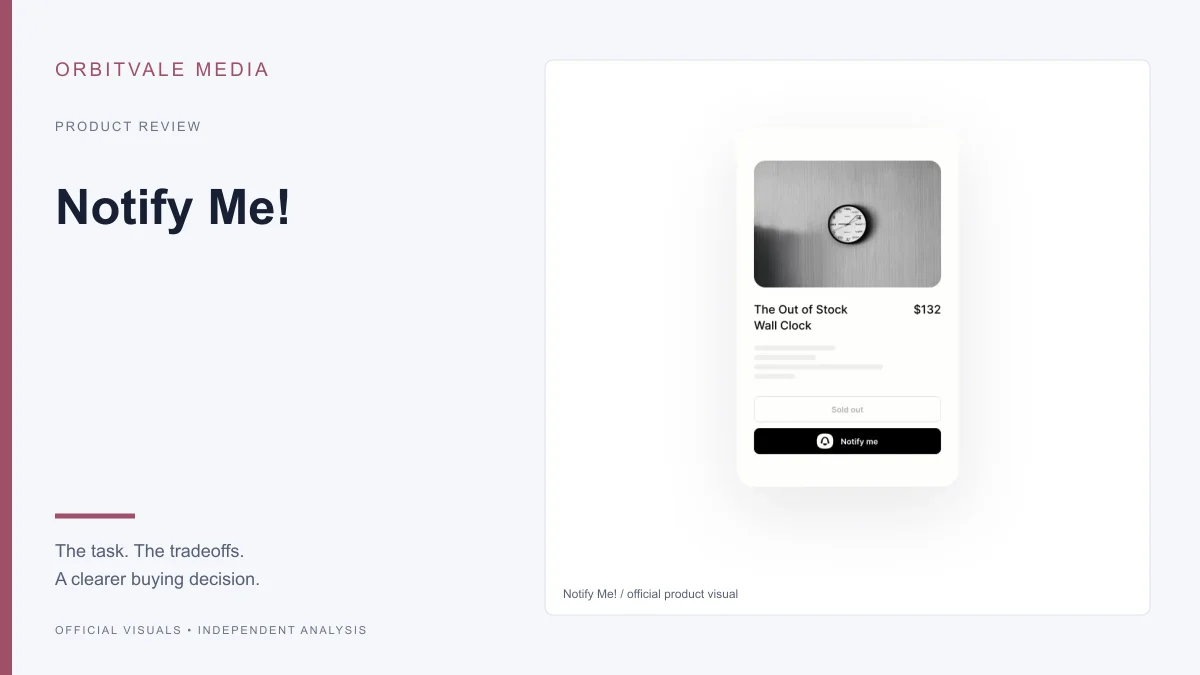
Notify Me! addresses a clear Shopify problem: interested customers arrive when a product cannot be bought through the normal in-stock path. Back-in-stock alerts, preorders and wishlists can keep that interest connected to a later action. Their value depends on the reliability of the availability promise and the way returning customers are treated.
We would start with a small set of variants whose stock dates are reasonably predictable. An alert list is useful evidence of expressed interest; it is not a guaranteed sales forecast. For preorders, checkout language, payment timing and fulfilment updates deserve as much attention as the widget.
Table of Contents
The buying decision
| Put it on the shortlist when | Choose another route when |
|---|---|
| A Shopify merchant with recurring stockouts, predictable replenishment and a person responsible for customer-facing availability. | A store whose stock records are unreliable or that plans to treat every alert sign-up as permission for unrelated promotions. |
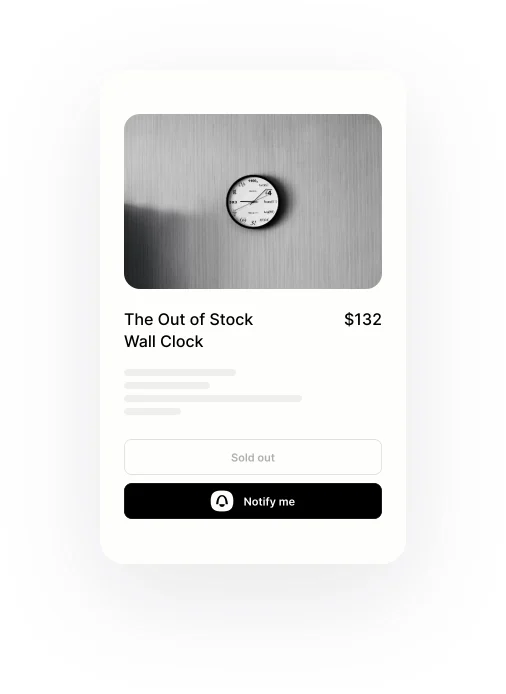
A realistic job for Notify Me!
A footwear store sells out of two sizes while other variants remain available. The proposed trial captures size-specific interest, replenishes one size and checks that the other group receives no premature message. A preorder case uses a deliberately changed expected dispatch date.
What the capabilities mean in practice
Stock alerts
Notify Me! offers back-in-stock notification workflows. Official product overview.
Keep interest at the correct product and variant level. A customer waiting for one size should not receive a generic restock promise.
Preorders
The app supports preorder-related commerce. Official product overview.
Inspect current payment and order behaviour in the actual store. Make delivery expectations and changed dates clear before checkout.
Wishlists
Wishlist capability supports retained shopping intent. Official product overview.
Distinguish a saved preference from an order or consent to every marketing channel.
Shopify integration
The official app listing describes compatibility and plan limits. Official product overview.
Test the live theme, locale, checkout and variant setup. A storefront widget must work with the real buying path.
Current plan boundaries
Notification volume and merchant eligibility determine plan choice; SMS and WhatsApp pricing varies by destination. Free includes small notification and lifetime action allowances. A Kickstart offer is restricted to Basic Shopify stores in their first year. Official plan source.
- A notification request and a sent notification are different quantities; limits should be checked in the chosen plan.
- The free allowances include lifetime request/preorder/wishlist limits, while notifications are monthly; do not describe every allowance as renewing monthly.
The snapshot above is tied to the review date. Promotions, billing interval, location and account migration can change the payable amount. The decision below uses the cost drivers rather than pretending a headline fee describes every configuration.
A practical evaluation sequence
Use the following as a proposed pilot. Keep source inputs and accepted outputs so another person can review the result. The sequence is designed around the task above; it is not a claim that OrbitVale ran an account test.
1. Select a small product set
Choose variants with meaningful demand and an owned replenishment date. Avoid a store-wide rollout before learning the exceptions.
2. Write the customer promise
Explain what the alert or preorder means, including payment and estimated fulfilment where relevant.
3. Test variant identity
Sign up for one unavailable size and replenish another. Confirm the wrong customer group is not notified.
4. Review a changed date
Move an expected arrival later and inspect the communication and order-handling consequences.
5. Check preference boundaries
Confirm how the app records notification consent and how it relates to the store’s broader marketing preferences.
6. Measure fulfilled interest
Track notified customers, later purchases and cancellations. Use the stock window and available quantity to interpret results.
The operating details that decide the fit
Keep expressed interest separate from committed demand
An alert or wishlist is a useful signal, but customers can change their mind or buy elsewhere. Use sign-ups alongside past conversion, seasonality and the available replenishment quantity. Do not place a purchase order solely from the waiting-list count.
Variant identity matters. A customer requesting one size or colour should not receive a generic promise when another variant arrives. Test an intentionally mismatched replenishment event.
Make the availability promise understandable
An alert, preorder and normal order are different customer commitments. Explain when payment happens, what date is estimated and how a change will be communicated. Keep the storefront and confirmation consistent.
Assign one owner for the expected stock date. Marketing should not continue using an old launch promise after purchasing learns that a supplier is late.
Test scarce stock and simultaneous interest
A small replenishment can be exhausted quickly. Decide how notifications and any waiting-list priorities behave with limited quantity. A notification should not imply a reservation unless the system and offer actually provide one.
Inspect customer service consequences when notified shoppers arrive after stock sells out. The programme needs a clear explanation and a useful next step rather than repeated disappointment.
Evaluate the fulfilled result
Track notified shoppers, purchases during a defined stock window, cancellations and service questions. Compare by variant and available quantity. A high click count with no stock to fulfil is not a successful availability programme.
Start with a controlled product set. Expand after staff can explain date changes, permission records and the relationship between alerts and the broader marketing calendar.
Tradeoffs and reasons to reject the fit
Demand overstatement
Sign-ups reflect interest, not guaranteed purchase quantity. Plan inventory using more than the waiting list.
Premature notifications
A stock sync or receipt error can trigger a promise the warehouse cannot keep.
Preorder ambiguity
Unclear payment or dispatch terms create support work and cancellation risk. Review the whole customer journey.
Pricing the complete job
App cost and fulfilled contribution
If 120 alerts lead to an assumed 18 orders with $16 contribution each, the illustrative gross contribution is $288 before app cost, returns and service. Use observed conversions later; do not present the assumed 15% as an app result. Compare by variant and actual stock availability.
| Cost line | Include in the estimate |
|---|---|
| Required subscription | Use the tier that contains the actual workflow and record currency, billing interval and team size. |
| Variable services | Count the real billing unit and separately priced carrier, payment, communication or model services. |
| Setup and change | Include source cleanup, integration, training and the first meaningful revision. |
| Review and exceptions | Budget the people who approve outputs, investigate discrepancies and complete customer follow-up. |
| What disappears | Only count a saving when the old subscription or manual task can actually be retired. |
Keep a normal-month estimate and a busy-month estimate. Use the same accepted outcome in both. If the tool produces an intermediate draft, alert, record or label, include the remaining work needed to complete the customer or publishing task. Replace the example assumptions with your own observed figures after the pilot.
Alternatives and the boundary between jobs
Fast Bundle
Read the Fast Bundle review. A Shopify store with complementary products, reliable component stock and a known margin floor.
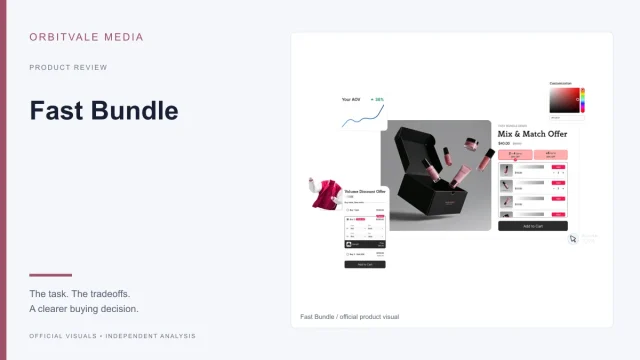
Fast Bundle is relevant to Shopify merchants who want to sell products together through bundles, quantity offers or related promotions. The right evaluation is not simply whether the average basket grows. Discounts, component stock, returns and fulfilment work determine whether the offer is commercially useful.
Postscript
Read the Postscript review. A Shopify brand with explicit SMS permission, a relevant recurring use case and an owner monitoring message economics.
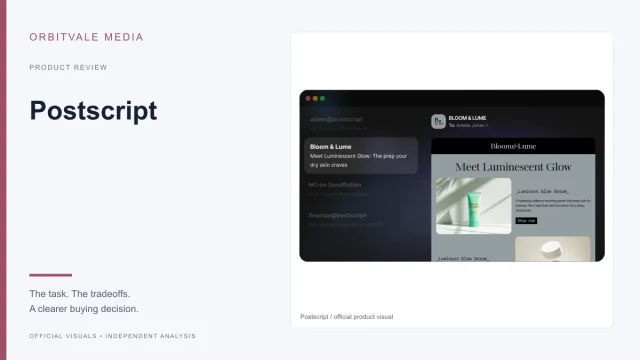
Postscript is a relevant specialist shortlist for a Shopify merchant treating SMS as an intentional customer channel. The strongest use is a timely, useful message supported by clear permission and reliable store context. Sending a promotion more directly does not make it more welcome, and carrier charges change the economics of a busy campaign.
Katana
Read the Katana review. A growing brand needing material availability, production and sales orders to inform one operating plan.
Katana is relevant when the business makes, assembles or transforms what it sells. A finished-goods count alone cannot explain whether the next batch can be produced: materials, work in progress and purchasing need to be connected. That makes Katana a different buying decision from a lightweight stock counter.
A decision record to keep
For Notify Me!, record the selected account and plan, the specific job, the accepted output and the unresolved limitation. The acceptance decision should explain whether “demand overstatement” is manageable for this business. Name the owner of the next review and preserve the result of the changed-case exercise, not only the easiest first pass.
Our recommendation
Notify Me! is worth a deliberate trial when this describes your business: A Shopify merchant with recurring stockouts, predictable replenishment and a person responsible for customer-facing availability. The case is weaker when this remains true: A store whose stock records are unreliable or that plans to treat every alert sign-up as permission for unrelated promotions. Start with the bounded scenario, price the complete job and expand after the team can explain the exceptions. Open the official Notify Me! website.
Sources, image credits and scope
OrbitVale’s analysis combines official product information with proposed operating exercises. We have not represented these exercises as hands-on tests, measured vendor results or customer case studies. Calculations use stated assumptions. Product and plan sources were reviewed on November 4, 2026.
Notify Me!: Official overview · Current pricing · Supporting official source 1.
Official visuals are credited beside each figure; they are vendor-published material, not independent test screenshots. Interactive plan displays and account-specific terms can differ. Confirm checkout, region and required entitlements before purchasing. See our editorial method and commercial disclosure.