Research-based product review · 7 min read · Source check: November 4, 2026
Unleashed is worth investigating when purchasing, stock and commercial reporting need a more structured relationship. A wholesale or product business may need to understand not just how many units exist, but where they are, what they cost and whether committed orders can be fulfilled. The correct shortlist depends on the operational scope and the accounting connection required.
We would evaluate a realistic purchase-to-sale cycle with partial receipts and changing costs. Implementation and data cleanup deserve a dedicated budget. A new inventory system improves decision-making when people trust its identifiers and movements; importing an unreconciled spreadsheet merely makes the old uncertainty more formal.
Table of Contents
The buying decision
| Put it on the shortlist when | Choose another route when |
|---|---|
| A growing wholesale or product business needing stronger inventory, purchasing and connected commercial controls. | A basic catalogue with little operational complexity, or a team unwilling to assign ownership for stock and cost data. |
A realistic job for Unleashed
A drinks distributor purchases in cases, sells in several pack sizes and receives goods in two deliveries. The proposed pilot checks unit conversion, landed cost assumptions and stock committed to a wholesale order.
What the capabilities mean in practice
Stock and purchasing
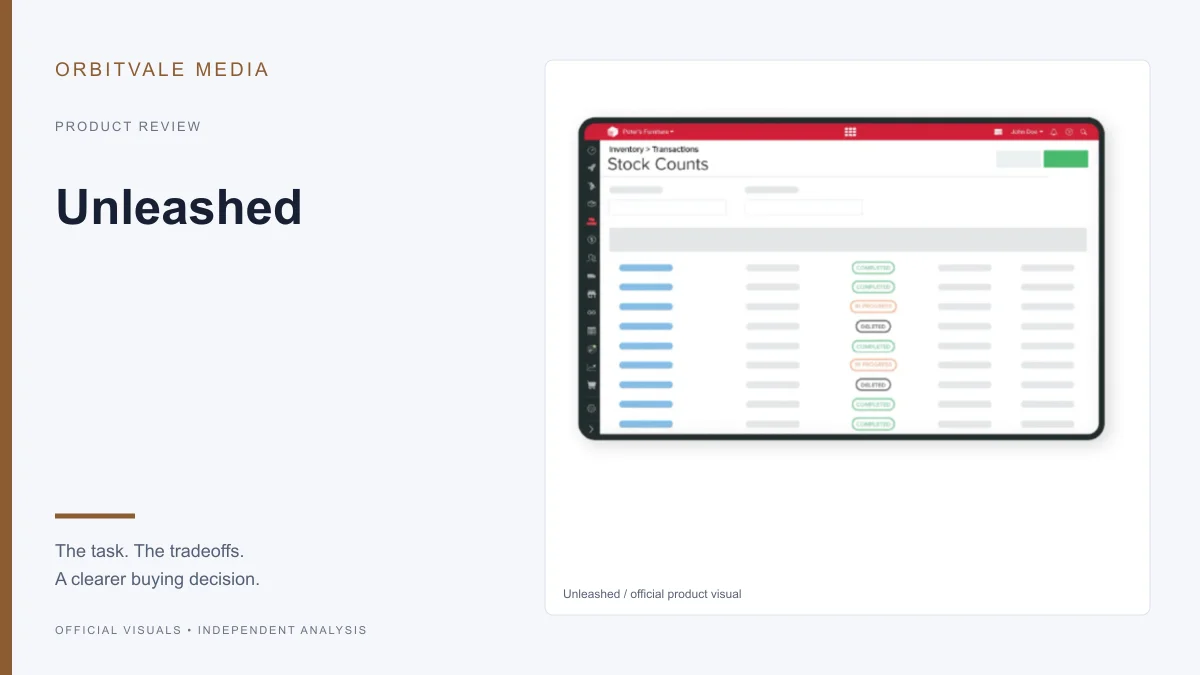
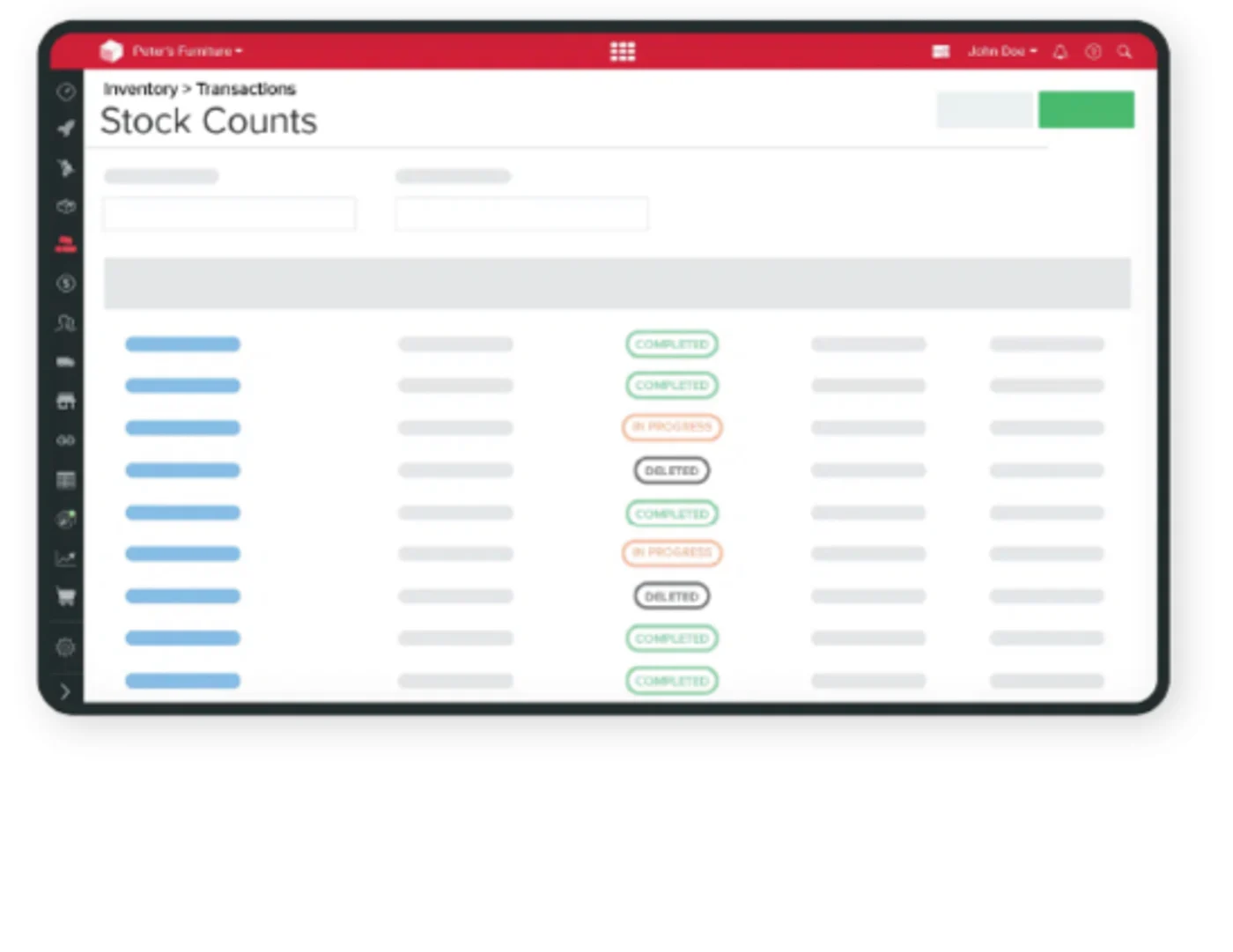
Unleashed offers inventory and purchasing workflows. Official product overview.
Model the real units and locations. A case-to-unit conversion error can affect both availability and cost.
Order operations
The product supports product business sales and stock processes. Official product overview.
Test partial fulfilment and the distinction between on-hand, committed and available quantities.
Accounting connection
The offering includes integrations with business systems. Official product overview.
Assign which system owns costs and financial postings. Reconcile a small transaction set before a broad migration.
Commercial scope
Current plans distinguish product and implementation needs. Official product overview.
Use regular ongoing prices separately from introductory promotions and obtain a scope for required integrations.
Current plan boundaries
Lite/Core/Pro subscriptions with included seat/order/integration/API allowances, plus optional modules, support and onboarding. The viewed USD page shows normal monthly Core $399 and Pro $729 alongside a temporary first-three-month offer; model renewal prices rather than promotional prices. Official plan source.
- Current packages include 100 sales orders/month before capacity upgrades; extra seats, integrations, warehouse devices and optional modules add costs.
- Production, demand forecasting, multi-bin warehouse and B2B/CRM features differ in plan or module entitlement. Budget onboarding and process ownership.
The snapshot above is tied to the review date. Promotions, billing interval, location and account migration can change the payable amount. The decision below uses the cost drivers rather than pretending a headline fee describes every configuration.
A practical evaluation sequence
Use the following as a proposed pilot. Keep source inputs and accepted outputs so another person can review the result. The sequence is designed around the task above; it is not a claim that OrbitVale ran an account test.
1. Define units and identities
Document purchase, stock and sales units. Use a representative conversion case.
2. Clean the opening records
Count selected stock and validate product costs before import.
3. Receive in two parts
Record what arrived, what remains expected and when each quantity becomes sellable.
4. Add a cost change
Explain treatment of freight and other landed costs using the business’s accounting policy.
5. Fulfil a mixed order
Include a partial quantity and a reserved item. Check the downstream accounting and customer status.
6. Reconcile and hand over
Have the operations and finance owners agree the sample ledger and document unresolved differences.
The operating details that decide the fit
Name the stock states
On hand, reserved, available, expected and quarantined describe different quantities. Decide which the storefront may promise. A returned item should not become available before inspection merely because a parcel arrived.
Keep locations meaningful to operators. A logical location that nobody uses physically makes reconciliation harder. Include transfers and temporary staging areas in the sample workflow.
Build an identifier dictionary
Connect supplier codes, internal SKUs, barcodes, marketplace identifiers and variants. One stable internal product identity reduces ambiguity when channel listings change. Bundles and multipacks require explicit component or unit rules.
Test a product with similar-looking variants. A quantity updating successfully is still wrong when it reaches the wrong size or pack. Keep the mapping owner and the date of the last change.
Reconcile the exception, not every screen
Compare the authoritative stock movements with receiving, fulfilment and channel records. Produce a small list of missing, duplicated or inconsistent identifiers that needs investigation.
Use adjustment reasons and appropriate authority. If staff routinely overwrite quantities to make an order work, the apparent accuracy can hide a process failure. Trace a sample variance back to a physical event.
Choose the right boundary for the system
A warehouse ledger, manufacturing planner and multichannel operations hub overlap but solve different primary jobs. Follow the movement that is hardest for the business to explain today.
Price the selected integrations and operating scope. Keep finance and operations involved where cost treatment matters. A shared definition of available stock is more valuable than another attractive dashboard.
Tradeoffs and reasons to reject the fit
Unit errors
An incorrect conversion can distort stock and margin at once.
Cost assumptions
Operational and accounting definitions must agree. A dashboard cannot choose the policy for the business.
Migration burden
Cleanup, training and integrations are part of the purchase, not an optional afterthought.
Pricing the complete job
Subscription, onboarding and controlled records
Estimate the selected regular plan, implementation, integration and stock-cleanup effort. If the business spends an illustrative 25 hours monthly reconciling purchasing and availability, measure the portion the pilot actually removes. Keep accuracy improvements separate from unproven revenue benefits.
| Cost line | Include in the estimate |
|---|---|
| Required subscription | Use the tier that contains the actual workflow and record currency, billing interval and team size. |
| Variable services | Count the real billing unit and separately priced carrier, payment, communication or model services. |
| Setup and change | Include source cleanup, integration, training and the first meaningful revision. |
| Review and exceptions | Budget the people who approve outputs, investigate discrepancies and complete customer follow-up. |
| What disappears | Only count a saving when the old subscription or manual task can actually be retired. |
Keep a normal-month estimate and a busy-month estimate. Use the same accepted outcome in both. If the tool produces an intermediate draft, alert, record or label, include the remaining work needed to complete the customer or publishing task. Replace the example assumptions with your own observed figures after the pilot.
Alternatives and the boundary between jobs
Katana
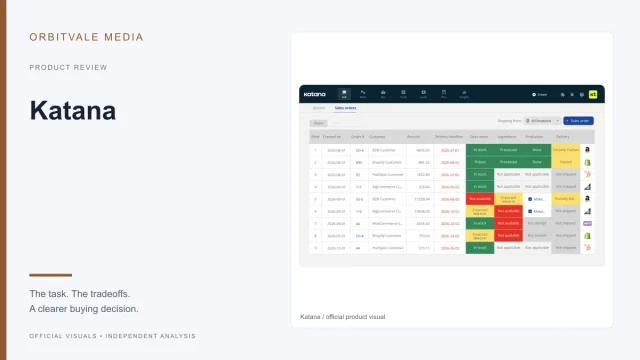
Read the Katana review. A growing brand needing material availability, production and sales orders to inform one operating plan.
Katana is relevant when the business makes, assembles or transforms what it sells. A finished-goods count alone cannot explain whether the next batch can be produced: materials, work in progress and purchasing need to be connected. That makes Katana a different buying decision from a lightweight stock counter.
Finale Inventory
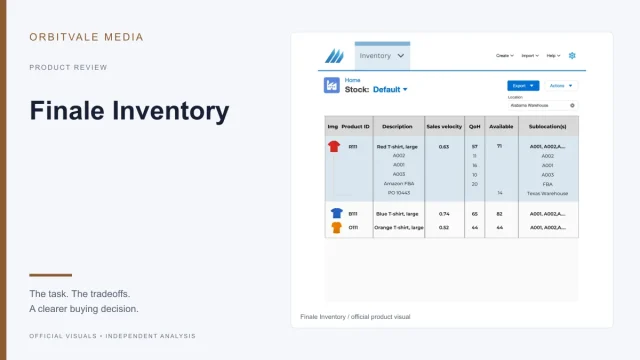
Read the Finale Inventory review. A multichannel seller needing a maintained stock ledger and clearer warehouse or order-related operations.
Finale Inventory is worth investigating when a merchant’s stock movements have outgrown a spreadsheet or disconnected channel counts. Multi-location inventory and operational workflows matter most when receiving, picking and adjustments need to agree on the same physical reality. The purchase should begin with a stock accuracy problem, not a desire for another dashboard.
Goflow
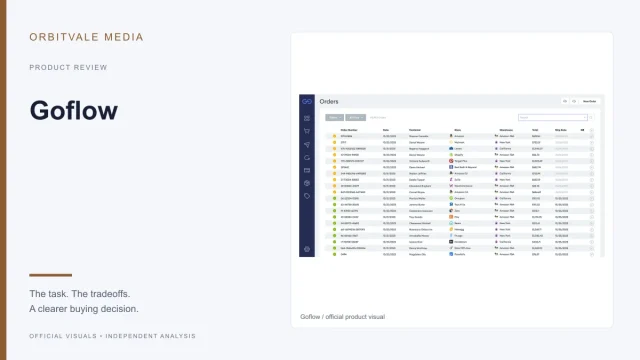
Read the Goflow review. A multichannel merchant coordinating marketplace orders, stock and shipping across several operating steps.
Goflow is relevant when a business’s operational problem crosses marketplaces, inventory and fulfilment. Bringing order activity into a coherent workflow can reduce repeated data entry and unclear handoffs. The harder issue is deciding which system owns stock and how the team recovers when a marketplace or carrier update arrives late.
A decision record to keep
For Unleashed, record the selected account and plan, the specific job, the accepted output and the unresolved limitation. The acceptance decision should explain whether “unit errors” is manageable for this business. Name the owner of the next review and preserve the result of the changed-case exercise, not only the easiest first pass.
Our recommendation
Unleashed is worth a deliberate trial when this describes your business: A growing wholesale or product business needing stronger inventory, purchasing and connected commercial controls. The case is weaker when this remains true: A basic catalogue with little operational complexity, or a team unwilling to assign ownership for stock and cost data. Start with the bounded scenario, price the complete job and expand after the team can explain the exceptions. Open the official Unleashed website.
Sources, image credits and scope
OrbitVale’s analysis combines official product information with proposed operating exercises. We have not represented these exercises as hands-on tests, measured vendor results or customer case studies. Calculations use stated assumptions. Product and plan sources were reviewed on November 4, 2026.
Unleashed: Official overview · Current pricing.
Official visuals are credited beside each figure; they are vendor-published material, not independent test screenshots. Interactive plan displays and account-specific terms can differ. Confirm checkout, region and required entitlements before purchasing. See our editorial method and commercial disclosure.